Yes that's how annexation works. See for example Russia annexing Crimea. Historically Crimea has been populated by ethnic Russians since Rurik conquered the place. I think it's a good thing that wars of conquest have become taboo, but let's not kid ourselves, for the vast majority of history it was bog standard to invade a place occupied by your co-ethnics and claim it was always your territory.
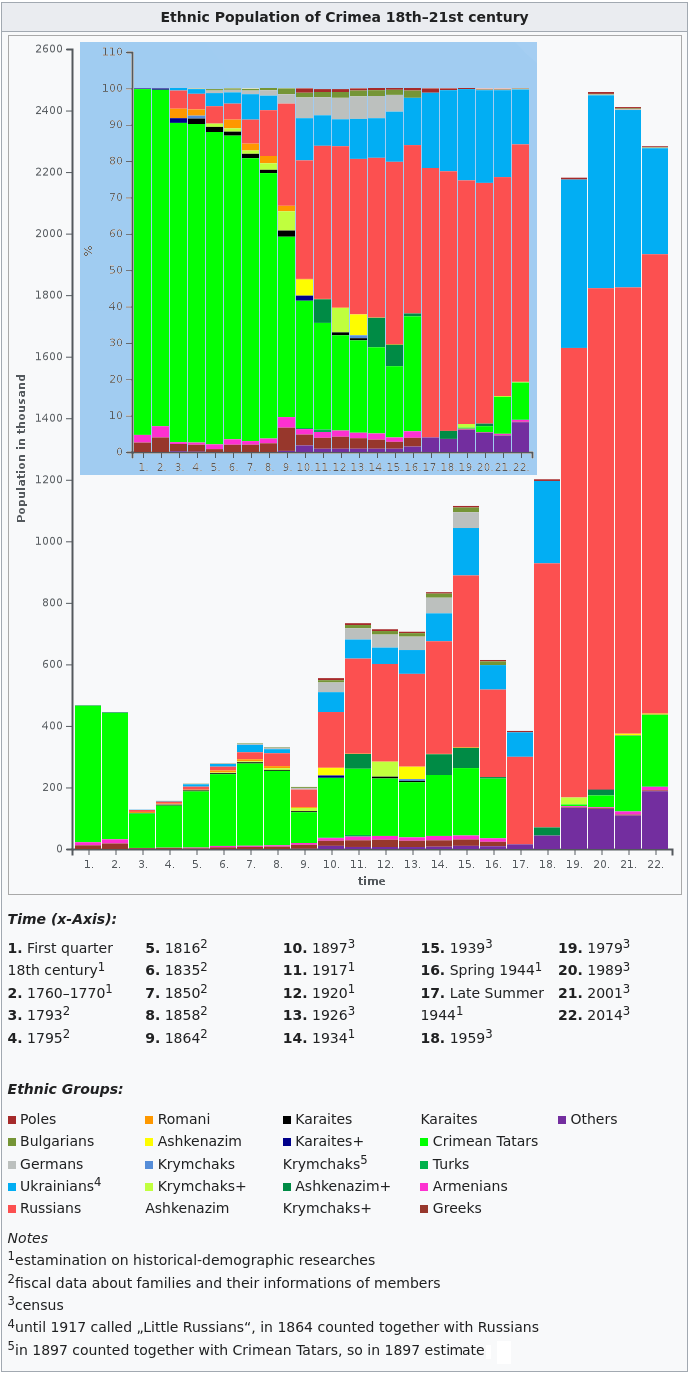
Crimea had barely any Russians until the mid-19th century and no outright majority until the mid-20th.
Anyway, either we live in a civilised era where things like ethnic cleansing and genocide should be condemned, or we live in an era where it is 'bog standard to invade a place occupied by your co-ethnics'.
After WW2, ethnic Germans were expelled from Czechoslovakia, Poland, and Königsberg and Poles and Ukrainians were uprooted forcefully into the boundaries of their modern nation-states.
If wars of conquest on the basis of 'this place contains our people' become 'bog standard', the ethnic cleansing of post-WW2 Europe and the post-Soviet Balkans becomes the inevitable and logical conclusion.
And that has absolutely nothing to do with anything I said; your claim was that Crimea was populated with Russians since Rurik, which is maybe true but extremely misleading because it constituted a percentage point or two at best. Bringing up the Ukrainian population accounts for nought unless you're suggesting expelling all the Slavs from Crimea and returning it to Tatar rule.
> The Ukrainian claim to Crimea is weaker than Russia's.
The Ukrainian claim to Crimea is stronger because they have a legal basis to its claim. If we return to a state of the world where claims to land are made on the basis of 'my group lives here, therefore it's ours', we will inevitably reap the consequences of post-war Europe.
On the same logic, Germany had a stronger claim to the Sudetenland than Czechoslovakia. But what did that get the Germans in the end? Complete expulsion from the Sudetenland.