The system has effectively failed most everywhere on the West. The post-WWII generations are numerous and have a long life expectancy, apparently longer than the pension systems planned for. Generations that came after them are less numerous, and, in a way, somehow less prosperous. They cannot pay enough to keep the pension systems afloat.
The Japanese faced this earlier and harder than Europe, with about 30% of their population being past the retirement age. They increased their productivity very significantly, but it's still not enough, and a lot of older folks in Japan keep working well past the retirement age, sometimes even re-hired by the companies from which they had retired.
It'll keep getting worse, as more and more people concentrate into large cities. And large cities are family-hostile. The birth rate in cities is strongly anti-correlated with the city size. People just don't feel content and happy to have children in dense cities.
Japan is very illustrative in this regard. Young people are forced into unaffordable cities, where they often live in cramped shoebox-sized apartments. While beautiful spacious traditional homes are decaying just 2 hours away by car.
What can help? Promote smaller cities, by focusing on making smaller cities more attractive for employers. This is already happening with the remote work, and it helps: https://eig.org/families-exodus/
How to make smaller cities more attractive? Put a stop to densification of larger cities, and tax (or cap-and-trade) the office space in dense areas.
This is a very sensible comment. One thing that could explain why I see (subjectively) a lot more bigger families in Switzerland where I live compared to other places in Europe is that cities‘ size is „just right“, so having a family to start with is much easier than in large, urban areas.
How do you know that this is separated from other factors, like woman being more educated and have more access to birth control in urban area ? How can we be sure that housing size is the single deciding factor as you said ?
To tell you the truth I only ever see poor people (immigrants, mostly) that carry around like 3-4 kids in cities (I am in SF) while everyone else either has 1 or no kids.
They don’t speak English and I’m not sure if they will assimilate well. I already see street vendors, trash everywhere, and other 3rd world behavior in some parts of SF.
I’m an immigrant from 3rd world. It’s pretty sad to see here.
Well in my country all the land is owned, either by the crown or by land owners, so at least in my country, the government would have to just...give away land? (Canada, The West)
To build a house and live sustainably it needs to be somewhat near other community surly? For access to grocery, education and health care, and then also modern opportunities. Barrie is probably the most reasonable area outside of Toronto and land out there is still very expensive. How do you see it working for someone who just graduated from college and has $200k in student debt? I know a lot of people who are stuck, I don't know the solution. If I was them and society wanted me to have a kid for the good of society, I'd say sure, give me a house and $3MM, other wise, why bother...?? Nobody wants to continue this miserable cycle.
Of course, building a new community from scratch is hard and is probably not worth it. But there are plenty of small cities that can act as "seeds".
Barrie is still in the general Toronto area, so it's expensive. Sudbury further north that is definitely not a part of Toronto anymore, has very reasonable houses for ~$400k, or 5 years of average household income in Ontario. This is well within the normal "affordable" range, so a 20-years mortgage will be around 30% of income.
The problem is, people _can't_ live in Sudbury because there are no jobs there!
My plan at some point is to do a big tech start-up in Winnipeg. Bit of other stuff still to do first, but I have an eye on Winnipeg (good flight times!!)
> People just don't feel content and happy to have children in dense cities.
Correlation is not causation. People happily raised children in dense cities for centuries. It was only when the postwar regime of making new housing illegal took hold, and housing prices inevitably spiralled out of control, that they stopped.
> Young people are forced into unaffordable cities, where they often live in cramped shoebox-sized apartments. While beautiful spacious traditional homes are decaying just 2 hours away by car.
Those old houses look great in instagram photos but they're not very fun to actually live in. Young people are rightly prioritising places that are good to live instead of the boomer square feet fetish.
> Put a stop to densification of larger cities, and tax (or cap-and-trade) the office space in dense areas.
Killing the most economically productive parts of the country is not going to magically make other parts more productive, it's just going to destroy the whole country's economy.
The causes of the population decline are a) women marrying later, or not marrying at all, because they have the option of a career and prefer that b) families that want to give their children a good future having few children, mainly because of the cost of education. Those are the things you need to address if you want to change it.
> Those old houses look great in instagram photos but they're not very fun to actually live in. Young people are rightly prioritising places that are good to live instead of the boomer square feet fetish.
How practical is raising kids in a 20m2 studio? Especially if you've got multiple. I'd bet not nearly as practical as in a house. Plus the recent trend of building lots of smaller apartments instead of a bit bigger and way more practical ones.
20 is maybe going too far, but a bigger space is often just harder to keep clean, especially with kids. Of course if you're raising kids in a city apartment you'll want them spending a lot of time out of the house (whether that's parks, community centers, just shopping, ...) but that's a good healthy practice anyway.
> Correlation is not causation. People happily raised children in dense cities for centuries.
London is an example of such a city. Its population in 1750 was 750000 people. It was not a "large city" at all by current standards.
> Those old houses look great in instagram photos but they're not very fun to actually live in.
Oh, I agree. However, for the price of an apartment in Tokyo, you can build a _new_ home with all the modern amenities.
> Young people are rightly prioritising places that are good to live instead of the boomer square feet fetish.
Yeah, like "microapartments" where you can cook food while sitting on a toilet. Very well suited for hikikomori, great for raising 3 children!
> Killing the most economically productive parts of the country is not going to magically make other parts more productive, it's just going to destroy the whole country's economy.
It won't kill anything, it will just move jobs out of large cities. We've already had a "dry run" of this during the pandemic.
> amilies that want to give their children a good future having few children, mainly because of the cost of education.
Europe has free (or cheap) education. Yet birth rates are even lower than in the US.
> Those are the things you need to address if you want to change it.
Then why people moving out of cities have a greater fertility rate?
> London is an example of such a city. Its population in 1750 was 750000 people
And its population in the 1930s, with a healthy fertility rate, was 11 million.
> for the price of an apartment in Tokyo, you can build a _new_ home with all the modern amenities.
Maybe - bear in mind that building costs are much higher out in the country. But assuming you build a big house, what would you do with it? I guess all the cleaning will help make life less boring.
> It won't kill anything, it will just move jobs out of large cities. We've already had a "dry run" of this during the pandemic.
The pandemic did a lot of economic damage, and many jobs stayed in the cities or are rushing to return there now.
> Europe has free (or cheap) education.
But much stronger womens' rights and correspondingly low marriage rates.
> Then why people moving out of cities have a greater fertility rate?
In Japan? Maybe because of all the cash subsidies for moving out with children.
But the current drop below the replacement rate is all due to increased density. If you look at the stats, the urbanization percent stayed flat. However, more and more people are moving into a smaller and smaller set of large cities.
I feel, generally, with an aging population + rising unemployment due to AI, we'll reach a crunch point that puts governments under immense pressure to increase taxes (probably on megacorps & the wealthy) more in order to fund welfare. The most optimistic, utopian, solution would be UBI and an artisan economy, but I think we all know that capitalism isn't kind enough for that to play out so we'll probably end up with something much more dystopian.
> we'll reach a crunch point that puts governments under immense pressure to increase taxes (probably on megacorps & the wealthy) more in order to fund welfare.
I don't see how even that helps. What you need to fund basic welfare is a large supply of basic goods (shelter, food, medical care). The basic problem with retirement of a lager generation than subsequent generations is a lack of labor/productivity. Those basic goods don't really respond well to just throwing money from tech companies/rich people at the problem, you need people to work to provide those goods and services.
The only way taxes help is if they discourage "unproductive" economic activity (SWEs and financial planners) so much that those people start working as nurses and construction workers instead.
The spend like crazy on nothing, cruises, trinkets and inflated healthcare. All that spending yields nothing of substance except for experienced and critical doctors.
But people are living longer, in better health (I think but didn’t verify with data) and entering the workforce later (due to more secondary schooling).
Setting aside the issues of declining birth rate for a minute, this seems like a reasonable adjustment to the other factors?
The metric of “living longer” isn’t the same as “life expectancy once you reach the age of 65”, for example. In the US, when someone cites a statistic that our average life span decreased, it’s due to the effects of early-life mortality on the mean. If you make it past 65, it’s a different statistic.
True but no matter how healthy one is in their 60s and 70s people's health degrade significantly in their 80s. So, you have then 10 year of healthy life after retirement.
There's the flip side if the coin though: old people are healthier in Denmark (vs US for example [1]) due to the social welfare system. Well, that system needs to be funded. With the aging population, the costs are rising but contributions are (relatively) declining. That's why there's a push for higher retirement age. It's either this, or defunding the social welfare programs, or immigration. That last one isn't a viable political option in Denmark at the moment.
I think what's happening though is that current generations are taking it easier in a lot of ways as a result of having to work more. For example, avoiding senior promotions into management etc.
Personally, I'm not sure that they are living in better health in the way that I care about. I.e. my goal is to retire when I'm still healthy enough to do things (i.e. travel). Although they are likely healthier than previous generations, most of the 70 years olds I see still aren't healthy enough to travel.
I had a great grandparent live to 102. 3 of my 4 grandparents lived into their late 80s with the oldest passing a month shy of 90. Even my grandparent who smoked 2 packs of cigarettes a day lived to 78. For all of them, their last good year was about year 80.
My dad just turned 78 and has really slowed the last 5 years. Longer life says little about quality of life.
The policy for retirement age is related to when society sees fit to sustain someone that does not work. I think it has more to do with how the society sees the elders and what it can afford than to the goals of specific individuals.
why wait for travel until you are retired? Retirement should not be "the" goal in life.
I've been traveling for holidays every year since I was 25 for at least 3 weeks every year, loving it so much. First it was backpacking, now it transitioned into a bit more luxury as I got older.
You don't know if you'll be hit by a bus next year, retirement is a silly milestone to focus on.
I didnt have time to write a whole treatise. Yes women’s was brought in line with men’s. I should have said, men’s retirement age has not gone up but said retirement age bc it’s an HN comment, not a published paper.
The raise to 68 will happen, but it has not happened yet. So, I think to frame my comment as “simply untrue” is disingenuous at best.
There was a steady rise in life expectancy at retirement age in the UK until 2020, then something happened and it's fallen significantly. My guess is that it will rise rapidly over the next 15 years and this will be regarded as some sort of triumph for the public health system (unless there is another pandemic of course).
Take on and service more debt (e.g. larger mortgages). The productivity gains are claimed by creditors (i.e. those with existing capital). At least, that's a possible explanation.
It is simple mathematics. European pension systems are not a saving system, but a pay as you go system, where pensions are paid from the people who work now. What you get in taxes this month you pay as pensions this month, as a state. This is the Bismarck model and it was invented at a time when the average lifespan was lower than the pension age, so many people were contributing very little as a percentage for very few people to get pensions. Today the situation is the opposite, with less and less people paying (not too many people start working at 16 years like in 1860), retirement age was lowered in most countries, the percentage of salary you pay as pension tax can be 25%, growing that is not too easy as this is just part of the taxes workers pay.
This system was working back in 1860, but it is a Ponzi scheme in decline for the past 50 years. And there is no way out, most people rely on state pensions to live after retirement; it is the perfect trap.
If pensions were funded by actual retirement accounts, where employees invested money into some state fund and have it paid out for retirement this would be entirely unproblematic.
But the pension system in many EU countries is set up in a way in which tax contributions now finance pensions now. This can only work with a steadily growing economy which continually generates more revenue when more people retire. In some sense it is a literal Pyramid scheme, in which the obligations are continually pushed to younger generations, which have to contribute based on how many pensioners there are.
Especially now as EU economies become weaker this issue becomes bigger and bigger.
Fundamentally any retirement plan that doesn't involve canned food in a celler is pay-go because the retirees will be consuming resources from the economy they retired into rather than the one they were workers in.
Their retirement savings can be in public company stocks instead of government guarantees but that only works if there are people willing to buy those stocks (ex: younger people saving for retirement).
Exactly. A world where aggregate consumer demand shrinks year after year is a world where all asset prices slide forever. Retirement is simply not possible on any large scale.
That's only true if the economy doesn't grow i.e. productivity doesn't improve. If retirements are funded from returns on assets they scale with productivity. If they're funded by current workers they're bounded by the limits of population and wage growth.
There is a production side of the equation but also a demand side. Through robotics and AI, Toyota might get really good at making cars really fast with minimal human labor. But if the demand for cars drops every year, the value of Toyota will be like a melting ice cube. This will be true for all stocks actually, (except perhaps the firms that sell adult diapers) but not only stocks, but property as well. And probably bonds. Do we really think Japan is good for their 2060 bonds, assuming no debasement?
In a world with forever imploding consumer aggregate demand, there is no safe asset.
It breaks down if you think about individual firms like Toyota. But the macro picture is that humans are consuming less goods and services and due to that consumer demand drops. And that means the non-working population's needs can still be fulfilled by the proportionately-smaller working population.
Asset prices are just numbers. A retirement fund that invests in broad-based stock and bond indices will have returns that track the productivity of the entire economy. If the economy is producing more it means people are consuming more. If it produces less, people are consuming less. It balances out.
An extremely productive economy with 1/5 the number of consumers (and dropping) will have a cheaper stock index, even with improved productivity. Asset prices over the long-term are driven by cashflows. Hollowing out revenue while improving productivity still results in a lower asset price because your cashflows are smaller.
Productivity gains will also be swimming against the stream because scale advantage will deteriorate in all sectors.
No, fundamentally it doesn't really matter. Retired people consume but don't produce. They are fed by the economy of today, not by economy of the past.
Whatever you accumulate for retirement (cash, stocks, gold, state pension points) it only represents coupons for your share of the economy of the future. Details may differ but fundamentals are the same: it a promise that the future generation will share some of their yield with you.
Retirement migration will be common in the future, either to lower-cost parts of the country or to different countries altogether. It's happening right now with Spain or Florida, but it will get even more common.
> If pensions were funded by actual retirement accounts, where employees invested money into some state fund and have it paid out for retirement this would be entirely unproblematic.
You're talking about a system of pension by capitalization, like in US, which comes with its own problems.
Namely that if you reach retirement age during a crash like in 2008, you're screwed. You have to work 5 more years hoping the market recovers in the meantime, or retire anyway and get way less than you put in.
There's not enough immigrants that actually are of financial benefit to Denmark. Only European immigrants are a large financial benefit throughout their lifespan, and Middle Eastern immigrants are a financial detriment even in their prime working years[0]. That is apart from the cultural effects of having a large portion of your population consist of non-Danish, and especially non-European immigrants, which might have its own detrimental effect on the birth rate.
It's not about race, it's about culture and education. For instance, Chinese immigrants are usually an economic boost anywhere they go, due to the can-do attitude and respect for education and business activity in the Chinese culture in general.
Also the Chinese immigrants in question, like many others, usually immigrate seeking a better life, it's a strong self-selection filter. Middle Eastern immigrants of last 10-15 years in Europe are refugees, displaced by wars; they did not choose Denmark (or other Western European countries) because they planned to integrate and to prosper there, they ran there to merely stay alive. They need a lot of help adapting. Even if they are very willing to work, they may lack the knowledge required for gainful employment, and there are only so many dish-washing and trash-disposal jobs.
Those who adapt can make it big; consider people like Freddie Mercury or Nassim Taleb.
The sultanate of Zanzibar is technically closer to Africa than to the Arabian peninsula, it was a remnant of the Omani empire, with very thick Middle Eastern influence, and obviously Muslim culture.
The problem with immigration isn't immigrants, it's racists. Immigration has never caused me any problem at all - it's added a lot to my life and my communities, in fact - and I've lived around many immigrants.
> Chinese immigrants are usually an economic boost
Chinese immigrants were hated and discriminated against for much of US history, going back over a century. You could hardly pick a worse example for your claim.
The US is built by uneducated immigrants - including from China - who came to the land of freedom and opportunity. China was a land of extreme poverty and illiteracy for much of US history (something Western countries had a hand in causing, and I'm very glad for people there that they have so much more prosperity now).
(However, the most prosperous Chinese people are in the democratic areas, Taiwan and, until recently, Hong Kong. It's freedom and democracy, not culture and language that matter. Give people freedom and they prosper.)
It's all just stuff fabricated by racists to rationalize their prejudices. Look at the horrors Europe has inflicted on itself and the world due to these prejudices and rationalizations - the most destructive events in human history. Enough.
More racism on their part - that's the problem, as I said. I also very much doubt that is true, but generally people do generally segregate by economic means, and first generation immigrants understandably tend to live in their own communities, everywhere. Where else do you find people to talk to, who understand you; where else do you even find dinner or some decent proper tea?
Middle Eastern immigrants are not (usually, relatively, on average) unproductive because of their skin color. They're unproductive because they suffer from a large language barrier, tend to have large families that use more government subsidies, are often traumatized by the conditions they escaped, have qualifications that are not recognized in Denmark and have to work menial jobs instead, face racism when they apply for jobs they are qualified for, etc.
> They're unproductive because they suffer from a large language barrier,
Immigrants everywhere come with a language barrier. If you live in the US, very probably your ancestors did. It's the same with every first generation from everywhere.
The barriers are not all the same.
Somebody moving from Norway or Sweden will have a much easier time picking up Danish. And European immigrants are highly likely to speak English, meaning they can communicate with Danes who speak English (virtually all of them) from day one.
You're really struggling to find problems. English is spoken all over the world - people all over the world learn it, in China, India ... places with completely unrelated languages.
I think it's both. I think race plays part in it because the trend follows with the descendants who often absorb (parts) of the culture. There's also not that much in their culture that would explain it, to me. In my experience they are often hard workers. It's very taboo to say, but there is difference between races.
Is it racist to say that there's difference between races?
DEI is important, specially Diversity. In order to have diversity, you need to have different cultures. Mass immigration erodes diversity. Diversity exists by having different nations with different cultures, not one culture everywhere.
And then their children turn out to be some of the most productive and contributory to a nation (in my experience), even despite some of the headwinds.
Perhaps in the US due to pre-selection, but in Europe the 2nd generation of those MENA migrants frequently becomes an even bigger burden to the host countries due to the former turning to criminal activities or radicalization.
"frequently" ... about as useful as my "in my experience", lol
Sorry, I don't buy that argument re: second generation. I've lived and seen it. Perhaps my lived experience isn't representative but I don't see second generation citizens turning to crime or radicalisation in huge numbers. I see them at work, and looking after their families. I fear the brush you are using is so broad as to, sorry, be useless.
Agreed. And the idea that you can call people criminals based on their ethnic heritage is plain racism - they are individuals who will themselves succeed or fail, be good or bad, just like individuals whose parents already lived in the country. Some of those people do bad things like promote hate and racial discrimination, but we can't say that about all of them; it's their individual choice and action.
"The study has faced criticism over its methodology, as it only studied rape convictions in Sweden. Experts point to the fact that just a small proportion of rapes in the country are reported to the authorities.
Jerzy Sarnecki, a criminologist at Stockholm University, dismissed the study as “meaningless” as it only examined figures for convicted rape.
“They’ve only looked at convicted people, and they make up a fraction of all rapists,” he told Swedish broadcaster SVT."
Even ignoring the above, I can think of many reasons, statistical and otherwise for the apparent difference. Perhaps you should try using your brain matter to do the same rather than just posting random links.
I repeat: I don't see second generation citizens turning to crime or radicalisation in huge numbers.
It's because the ME immigrants that make it to Denmark are traumatized refugees from war zones, with education that isn't recognized so they can often only do minimum wage work if they work at all. That's not racist, that's a result of laws and treaties.
I can only give you the rundown for Germany, but I guess it’s similar in Denmark:
Basically the state spends to much money on humans in general.
A young qualified immigrant might have a less negative impact than a slightly older German person, but both of them will be money sinks in the long run.
Statistically immigrants in Germany are less qualified than the general population, so they’ll have an even more negative impact.
The only valid solution is to reduce the spending per person, both birthrate and immigration will only delay the problem.
Denmark should be in a slightly better position than Germany since their health system is cheaper.
> Statistically immigrants in Germany are less qualified than the general population, so they’ll have an even more negative impact.
I need to see some data backing this. Also regardless of stats, many war refugees(the net negatives as told by media) are actually highly qualified but the asylum process and qualification recognition process is eternal. On top of the trauma and uncertainty, they also need to learn a new language, find a new community, patiently go through all the dystopian meetings, cope with their loss of loved ones.
In reality, it is possible for them to be net positive because if things were faster, they would often out qualify the average locals and this also has some effects on wage and market(over supply, constant demand and all the economics).
Immigration only works if the immigrants adopt and support the social norms and outcomes that you desire. If the immigrants have no desire to work, pay taxes, and support the elderly then you won't want them.
Getting immigrants who work is a non-issue. I never heard of immigrants from India, China, Africa or Latin America who don't work so long as they entered the country legally. The issue you are alluding to has to do with genuine refugees and illegal economic migrants, who are not filtered at the border depending on their employability within the local market.
But the cultural shift is still inevitable. A foreigner is not a local, and it is neither fair nor ethical to expect a foreigner to transform themselves into a local.
I think, if you are concerned with the cultural shift, you can give immigrants temporary term VISAs and make it clear their stay is going to be strictly temporary. That was supposed to be how the Gastarbeiter system works. Thing is, when you have already on boarded a foreign worker and have had them working for you for 2 years already, you don't want to let them go and replace them with a fresh foreign worker who you have to retrain.
Assimilation as most people understand it does not necessitate an immigrant become completely indistinguishable from a native citizen. There are some baseline expectations that are not always met right now, such as learning the official language of one's host country, and sometimes its social standards. Most countries simply lack the necessary coercive incentives to make that happen systematically. I would argue that most Western cultures have become too individualistic at the expense of societal health, fueling the notion that assimilation is inherently unethical.
I fundamentally agree with your comment. But for Denmark, it is very difficult to learn Danish. I lived there 3 years, took courses and was at end able to do my daily stuff in English, but a part of the society simply does not want a foreigner to speak Danish. You are forced to use English.
My girlfriend asked me once in a Restaurant (Cafe Norden in Kopenhagen) why I was ordering in English. Then, I spent the complete evening ordering everything in Danish, to always receive answers in English. And this nearly everywhere (not my bakery, the girls there could not speak a word of English, this was an exception). This was in the early 2000's. This never happened to me in all the other countries I have been living in. A Danish colleague simply told me that he does not like to listen to broken Danish, better switch to English.
Still have a lot of friends in Denmark, integration there is not easy, even for highly qualified people from the EU.
Danes are by and large all English speakers, probably the last generation who would have much difficulty with conversational English are all 70+ years old now. And while Danes are generally very polite and friendly with foreigners, there is a level of personal closeness (part of the "hygge" concept) that you will rarely penetrate if you are not a lifelong close friend or family member. This is another part of why real integration into Danish culture is nearly impossible for a foreigner.
I observed over my 11 years in the Netherlands that the friendliness and quality of service I received was greater when I spoke English and much diminished when I spoke Dutch. The Netherlands is, similar to Denmark, a place where people would seemingly prefer to speak English than listen to an accent on their native language.
I had a similar experience in the Netherlands. We could have a 30 second exchange in their perfect English or a laboured 2 minute conversation in my abysmal Dutch. I struggled to improve because everyone would immediately switch to English.
I commend you for your efforts and I'm sure they were appreciated even by those who switched to English with you. It sounds like you were in the infamous long awkward intermediate stage of language learning. Depending on the cadence of your language classes, three years may not be a long time. Intensive language programs with daily lessons and drills are exponentially more effective than typical language-learning programs spread out across short sessions sprinkled throughout the week/month. In my opinion, it makes a lot more sense to place newcomers in intensive learning programs on arrival than to accept they will not be functional outside of ethnic enclaves, and wait decades for their children and grandchildren to finally integrate, as other commenters suggest. It's not an easy process and we can't expect everyone to have the intrinsic motivation to do it all on their own, which is why incentives are needed.
Without establishing a hermetic environment a la the Amish, assimilation happens automatically in the next generation if a nation has basic structures in place like public education to some minimum standard and basic anti-discrimination laws to allow economic advancement. Children absorb the culture that surrounds them, often to their parents' dismay.
The data I saw is that by the third generation, only a few percent speak the language of their grandparents' country, and most marry outside their nationality.
In the US, Italians, Irish, and Germans, as just a few examples, all were treated as unassmilated aliens. People say the same things, generation after generation about newcomers. If you moved to a country with a different language and culture, you might make an effort to learn the language but you would still think, read, etc. in your native language. Your kids would know both languages; their kids would of course speak the language of their surroundings.
What solves these problems is a fundamental belief in freedom for all. People don't need to speak your language to be your equal and be just as human, with the same rights as you.
This was certainly true of my Polish ancestors. My great grandfather arrived at age 19. He never really became fluent in English but could get by when he needed to. My grandfather spoke both Polish and English but only spoke English at home once he had school aged children. My father really only knew the Polish swear words and I know a handful of Polish phrases that only get used amongst family at Thanksgiving or Christmas. Don’t ask me to write them down. I’ve only ever heard them verbally.
Italians, Irish, Germans in US are bad examples, because Americans and Western Europeans are basically one and the same culture, the only significant difference being the language spoken. I suppose integrating Chinese or Indian people might take much longer.
In fact, they were seen as very different cultures and the exact same things were said about them. Only in hindsight do people say what you are saying (and in hindsight they will say the same about today's immigrants). In fact, the world has never been smaller or more homogenous - people in countries all over the world dress like us, are exposed to our culture a great many already speak English. Before you spread damaging misinformation - there are few evils inflicted by and on humanity than those based on these prejudices - shouldn't you know what you are saying? Shouldn't we talk great care?
Here's Benjamin Franklin (Palatine refers to the Holy Roman Empire or Germanic regions, depending on the source):
"[W]hy should the Palatine Boors be suffered to swarm into our Settlements, and by herding together establish their Language and Manners to the Exclusion of ours? Why should Pennsylvania, founded by the English, become a Colony of Aliens, who will shortly be so numerous as to Germanize us instead of our Anglifying them, and will never adopt our Language or Customs, any more than they can acquire our Complexion.
Which leads me to add one Remark: That the Number of purely white People in the World is proportionably very small. All Africa is black or tawny. Asia chiefly tawny. America (exclusive of the new Comers) wholly so. And in Europe, the Spaniards, Italians, French, Russians and Swedes, are generally of what we call a swarthy Complexion; as are the Germans also, the Saxons only excepted, who with the English, make the principal Body of White People on the Face of the Earth. I could wish their Numbers were increased. And while we are, as I may call it, Scouring our Planet, by clearing America of Woods, and so making this Side of our Globe reflect a brighter Light to the Eyes of Inhabitants in Mars or Venus, why should we in the Sight of Superior Beings, darken its People? why increase the Sons of Africa, by Planting them in America, where we have so fair an Opportunity, by excluding all Blacks and Tawneys, of increasing the lovely White and Red? But perhaps I am partial to the Complexion of my Country, for such Kind of Partiality is natural to Mankind."
Mhm, the current generation of kids of Turkish immigrants in Germany all seem to believe they are actually displaced Turks. I suppose thats what you encourage with double passport and voting for authoritarians at "home". (of course they are totally out of place in Turkey, that part of assimilation is unavoidable)
This is not borne out by the anecdata I have collected over the last 22 years as a foreign invader living in and observing Europe. Moroccans in the Netherlands, Albanians in Switzerland, even Irish Travellers in Ireland-- despite being integrated from primary school onward, all seem to be somewhat apart from the host culture even after several generations.
And yet they remain a distinct cultural group with different traditions and modes of living, despite integration at a school level. Apparently they've even diverged genetically[1] from the main population.
It often takes three generations. The first generation came willingly and thus have an incentive to put up with shit; the second generation did not, find people hating on them anyway, and understandably react by pulling back and doubling down on their heritage.
> you can give immigrants temporary term VISAs and make it clear their stay is going to be strictly temporary
In practice that rarely goes as intended. The first political party to say, "We changed our minds, you can all have citizenship," gets to secure power with an influx of loyal voters.
Maybe I misunderstand your point but... if these people are not citizens (i.e. they need a VISA) how could they actually vote for whatever party proposing this?
Well, if a party has enough votes to pass such a law, it means that the majority of the society has no problems with that.
Conversely, if this hypothetical party had a secret agenda to pass the law when they get elected, but they kept this a secret until then... first of all they will probably lose of voters in the next election.
Also, they might find out that former immigrants do not automatically reward this behaviour in terms of votes.
I do not find this scenario particularly realistic.
Integration is the job of the state as much as it is the job of the immigrant.
In America, we discovered basically by accident[0] how to bring in large groups of people and have them be economically and socially productive. Specifically, we had very generous family reunification programs, which outsourced the question of "what immigrants do we admit" to immigrants who had already successfully integrated. Effectively America became an invite system. The end result is that, for basically any background, every American city has a large and established immigrant population from that country for new immigrants to fall back on.
Other Western countries (e.g. western Europe, Canada, the UK, Australia, South Korea, and Japan) didn't do this. Instead, they treated immigration as a transaction: you can't come in unless you have some immediately beneficial purpose, and permanent residency is going to be an even higher bar still. What this gives you is immigration systems that select entirely for disaffected, college-educated workaholic youths with no connections to the local city. To put it in the words of Canadian Prime Minister Mark Carney:
"America is a melting pot. Canada is a mosaic. In the United States, they don't recognize differences[1]. They don't recognize First Nations. And there will never be the right to the French language."
These words are telling, in ways Carney probably didn't intend. He is proudly admitting that the thing that sets Canada apart from America - the thing that they should fight with military force against a wannabe dictator with annexation dreams - is the fact that they can't integrate people worth a damn.
[0] Family reunification visas were originally intended to deliberately preserve racist prejudices in the US immigration system. This backfired comically.
[1] ...has this guy never heard the phrase 'African-American' before?
> Immigration only works if the cultures are very similar so that they can assimilate, or the immigration levels are very low.
People just make this stuff up, any rationalization for hatred. It's not hard to see how immigration has worked, how Europe integrates with itself (a continent that fought endless wars before the proto-EU was born), and how the US is a country of immigrants. Rather than repeat it all, see:
"... Why should Pennsylvania, founded by the English, become a Colony of Aliens, who will shortly be so numerous as to Germanize us instead of our Anglifying them, and will never adopt our Language or Customs, any more than they can acquire our Complexion. ..."
It's very easy to see how immigration hasn't worked. Visit London, Brussels or Paris. Compare that to cities that have low immigration rates, like Warsaw.
Europe integrated itself because European countries have very similar culture, and are same/similar race.
You're comparing London, Brussels and Paris to Warsaw? I think most people would consider the former three to be much 'better' cities and greater successes - Paris and London are considered two of the greatest cities in the world! Right there with New York, also a home for immigrants from all over.
Yes, I have. You are living in an Internet disinformation unreality - just like the nonsense the right wing craps out about how horrible and dangerous NY is. As empirical data, look up real estate prices and tourism to the three cities, and see how Warsaw compares. Remember, people in Europe can easily go to Paris or Warsaw; going to London is a bit harder.
And that is with massive disinformation campaigns against immmigrants and 'liberal' cities.
(No offense to Warsaw - maybe only NY and Tokyo measure up to London and Paris.)
Improve the birth rate, yes, but you probably can't do that unless you deal with the resource situation as well.
So you can reduce pensions, improve the situation for the youth, take efforts to get an improved birth rate, making use of the resources lost to pensioners, and then maybe you can raise the pension later on once you realize things are stable.
The centre right often argue for less taxation ‘to grow businesses’. The argument being that the economy grows and that’s how the money is recouped. At least that’s what’s happened here in New Zealand.
Looking past ones next pay day does seem universally difficult.
You have to grow your economy at a rate that allows you to pay for the additional pensioners.
Birthrates seem very hard to change and even if change would happen it is much too slow.
Germany did the experiment on immigration and has not seen GDP growth for half a decade. There the system is failing far worse in some ways, but in Germany employees are paying directly for the pension plans, so the state just raises the employee contributions.
Because Germany does nothing to attract and keep employable immigrants. They only want to keep immigrants which completely tow the line of only speaking German, which inevitably attracts mostly bottom of the barrel. Significant portion of highly qualified workforce in Germany is umemployable because of refusal to conduct business in anything other than German.
Also, the beaurcracy is the real culprit for growth.
The total fertility rate (number of children per woman) seems stubborn against attempts to raise it.
I suggest instead altering the male/female ratio, so a stable or growing population can be maintained at lower TFR. Technically, filter sperm to remove those with Y chromosomes before artificial insemination.
I feel like there really hasn't been sincere data-backed methods with proper resources behind them, for example governments giving out minor cash benefits to parents of a few thousand dollars when that's a drop in the bucket compared to the total cost of raising a kid and is not going to convince anyone who wasn't already going to have kids.
Also, that's a wild solution. You'd have to do away with monogamy which would cause some pretty insane societal shifts. However, as a straight guy I can see the appeal lol.
The issue with low TFR seems to be difficulty of forming relationships, not failure to have children once relationships are formed.
I'm imagining it becoming a social norm for single women to have (at least) a single child. Perhaps they'd team up to make raising them easier, forming loose family-like units. Romantic attachments would be optional.
One consequence of such a situation would be an incentive toward private positive eugenics. Women would prefer semen from top quality donors.
At least in the UK the cost of childcare is a major factor putting people off.
People simply can't afford to send a kid to pre-school childcare because it's 2 or 3 thousand GBP per month. So you have to stay at home to look after them, but then you can't afford the rent/mortgage and/or food because you're not working. Woe betide you if you earn over 1 penny over 100K GBP because then you get zero help with costs.
They need to provide more government funded (i.e. universally free non-means-tested) pre-schooling like they do for 5-18 year olds.
I love this as a science fiction thought experiment but altering the male/ female ratio will never happen.
If someone tried to implement it- aside from the obvious problem of authoritarianism- the resulting male minority would live life in romantic "easy mode" so people who want the best for their kids would want male children and rebel against a system more likely to give them female children who would find romantic prospects difficult.
I suppose if someone invented a way to alter sexuality to allow straight women to opt into becoming gay the romance problem could be mitigated, but I'm guessing that this is impossible given the human brain is only so neuroplastic in adult years.
Or more. The prevalence of males seems to be an unfortunate consequence of evolution. There's an evolutionary equilibrium of nearly an equal chance of a male or female offspring, even though the ability of the species to reproduce would be higher with mostly female offspring.
No no, not like that. Well, maybe, but no. Most men are useless from a reproductive standpoint because they're not the bottleneck. Women are the bottleneck. More women means no more bottleneck, means more children per person.
Also sexual selection is a thing and I think we were really never meant to have this many men. Men seem good for being really successful or otherwise dying, not much in the middle.
But also, all this talk is purely from a reproductive standpoint. Human societies also need to consider fairness and rights.
If TFR stays well below 2, there's going to be major change sooner or later. The question becomes which change. Maybe the Amish will take over the world? Or maybe some solution we find really weird will be adopted by some other minority and they'll dominate.
No one knows how to increase the birth rate. And all the studies show that immigration increases the budget deficit, not reduces it (at least in that way in which it is being implemented now).
Actually the factors inhibiting birth rate are well known, but the actions to take are not something states wants to take. In Europe you cannot even talk about it, usually, unless you talk to younger family members and ask them why they don't want kids at or or just 1 or 2 max. There are economic, education and legal aspects that are clear for anyone that looked not farther than 50 years ago when having 3-4 kids was not exceptional.
Everyone knows. Stop contraception, stop woman education, stop abortions, reduce woman rights to 1800. Remove children rights, make environment where children are productive and bring profits to their parents, so they have financial incentive to create children.
Right, if anyone here has taken a human geography course this is the obvious answer. This is why birthrate was so high for so long. As nations developed and gained rights for women, it went lower and lower and lower.
And it makes complete sense. The reality is having a child kind of sucks for a woman, and I, nor anyone else, can blame a large portion of women for just saying "eh... no". I would probably say no, too, although it's hard to tell, because I'm not a woman.
Having children was once a boon, because conditions were shit. Now it's a burden. So, people will treat it as a burden.
Either make it less burdensome or revert women. Nobody wants to do the latter, so we must do the former. We have to invest in children, because children are a Nation's investment.
Not having to work as much to live seems like a decent way to increase birthrates. Having kids is/would be much easier if parents were at home more often and able to care for kids instead of contracting out childcare to daycare centers because you cannot afford to not have both parents working full time. But it comes at the cost of not growing as fast and being less attractive to capital investors/owners who are reaping by far the highest percentage of profits currently.
The elephant in the room that is getting some attention is demographic collapse. It’s been politicized, unfortunately, and seized on by strange people, but the fact remains that we’ve stuck our heads in the sand here. The seriousness of demographic collapse cannot be overstated. Social and economic collapse are inevitable unless something (morally licit, of course) is done to boost birth rates to above replacement rates, or kept at replacement levels. Once we reach a point of no return, it will be impossible to reverse course.
There’s a lot working against healthy demographics. We have decades of alarmist, misanthropic, Malthusian propaganda from types like Paul Ehrlich. We have now a hyperindividualistic culture - politically, socially, and economically - that is hostile both functionally as well as in sentiment toward the healthy function of family, and secondarily the community life it produces, as well as mental health). The logic of consumerism does not sit well with family life, because family life is not something that can be monetized. Consumerism relies on maximizing spending of the atomized individual, and in order for that to work, one must maximize the work done by that individual. Family life interferes with the regime of constant spending and the reign of total work. (Ironically, this makes the celebrated careerism of feminism an expression of this all consuming capitalist drive. It stigmatizes motherhood with demeaning labels like “stay-at-home mom” and celebrates the very office jobs that are the stuff of comedies.) Today, we understand everything with reference to the individual, even anachronistically reinterpreting history according to its alienating categories. Some governments have enacted pro-natalist policies, but they’re typically weak, superficial, and ineffective. We’re addicted to patterns of life formed over the last 70 years that we don’t want to let go of. Governments need to take much more serious measures that drastically favor, prioritize, and protect the family, through and through. Good luck doing that in our democratic societies. Addicts typically change only after they’ve experienced a crisis and hit rock bottom, and by then, it may be too late.
Immigration, of course, is no solution. The belief that immigration can fix the problem is itself rooted in the logic of hyperindividualism, where atomized individuals can be replaced by other atomized individuals to achieve net conservation or even gain according to the numbers. Cultural realities are totally ignored. The rate of immigration that a country can successfully absorb is not enough to outpace demographic decline. Exceeding that rate undermines the whole point of using immigration to compensate for demographic decline in the first place, since mass migrations are always harmful to host populations. You’re basically talking the collapse of the host populace and the formation of new ones in its place. Furthermore, immigration drains the populations of other countries, ones that are likely also facing demographic issues, which basically makes richer countries parasitic and callous about the continuity and futures of other peoples, until there are no more populations to drain of people anymore.
Raising the birth rate is extremely difficult and immigration will destroy a country's culture if not managed properly.
For an interesting case study, compare Japan (who refuses to allow mass immigration and is at risk of going extinct) and the UK (who has embraced it and is on the way to becoming Muslim-majority). It'll be interesting to see in 50 years which one has had better outcomes.
This is using the same flawed logic that has had people shouting about overpopulation since the 70's: assuming current* population growth rate will continue indefinitely
The difference is that this is a change in the demographics of a population, not the overall growth, which is limited by resources available. The growth of Islam isn't constrained by anything other than the cultural practices that lead to them having more children than the rest of the population and the tolerance of the country for immigration. These things could definitely shift to balance the scales but there's no guarantee that happens and there have absolutely been many times in history where a native population has been displaced by the growth of an immigrant group.
Nicholas, is it clear that at any point in the near future, let's say two generations (30-40 years) the Muslim population will not be a majority in the UK? I don't understand why you continue arguing.
You are not making your point any favour. It is right that everyone is calling you out for your xenophonbic BS.
If it grew 10x between 2001 and 2009 (starting from a very small base), then between 2009 and 2023 it grew by only 0.3x (see graph below).
So rate of growth went from 10x to 0.3x in around a decade, this is a hugely significant deceleration. It actually implies muslim community as portion of population is heading lower.
You're not comparing the same stats. The original stat was growth rate compared to the rest of the country. Islam's overall growth rate has been fairly steady for decades, although admittedly it has slowed, but at a rate that could conceivably stop above Christianity, which your chart shows is decreasing about as rapidly as Islam is rising. I think it's reasonable to project that it may settle below Islam eventually. Realistically, there will be continued backlash by native English and that may temper immigration, though even if immigration stops, the birth rate of Muslims in the UK is still much higher than native population.
However - if we're including atheist then clearly that'll be the majority position.
Ah, it's the same argument that my mum uses to say that if we don't do something about "the gays" then straight people will disappear, after all "there are a lot more of them than there used to be".
The most recent birth rate stats I can find is 2005-2010 where Muslims have a birth rate of 3.0 while the rest of the country is at 1.8. Estimates say it's more like 2.5 now, but the current overall UK birth rate is only 1.57 from a quick Google.
Yes I know the stats hover around roughly that, which is why I requested you to post those numbers as proof for anyone questioning it. There's also the very concerning fact that the last census conducted was before the immigration boom period (2010 or 2011 iirc), so literally everyone is working on outdated data.
Maybe not in one generation, but in 2-3 generations, the UK will definitely turn Islamic, especially given the exodus of other communities. The irony is that the well-off British are settling in the UAE en masse, a distinctly Islamic country, and driving property prices up there. It's not that much of a concern since local housing is distinctly separated from expat housing.
Actually, OP has given information that proves exactly that. Maybe not in one generation, but Lebanon was in a similar situation where the Muslim population, which was firmly a minority in the 1940s, outbred the Christian population and is currently more than the latter.
I don't have a horse in this game - I'm Muslim after all. But I've experienced London pre-immigration boom and post-immigration boom and I definitely prefer the former, like some of my Muslim peers. The fabric of London has already been destroyed, especially when given the fact that London natives have been priced out of their own homes. Given what I've seen firsthand, and what's preached in the mosques of the UK by unleashed and unhinged Imams, the UK is on track to become a Muslim country in 2 or 3 generations.
US annual deficit/debt is a meaningless number since it just prints as much money as it needs being the world reserve currency. It's a looney toons number.
This really isn't true. I am not deficit doomer, but you can't say its meaningless. The US paid $881 billion on interest on its debt last year. This is on par with the DoD. Yes, it's still only around a tenth of the US's total budget, but it is not hard to imagine the debt going up by 10 times. With the same interest rates, we then the US will pay as much in interest as the rest of the budget combined. If the US just needs to "print as much money as it needs", there is a certain point at which it will become hyperinflationary.
It's worth noting that it pays that interest back to itself. The risk of becoming hyperinflationary is real, but US can continue ignoring the problem pretty much indefinitely as long as other countries do their trading in US dollar.
If we assume the wealthy own the stock market, it’s $52 trillion - enough to pay off the debt and leave $16 trillion left over - which would cover about ten years (assuming the debt service has been removed by the payoff).
Whether nationalizing the entire US market would be worth it is left to the reader.
My grandpa went to prison (in Romania) in the 1950-es for being part of bourgeoise class because he fixed and ran a broken mill. He was a war refugee (from Romania to Romania) without any money, land or any other resources, but in Communist Romania running a mill would tag you as "super rich". I guess this is what you wanted to say there, correct?
I consider myself reasonably well-off but am unlikely to become even a millionaire in my life (inflation-adjusted). I’d say millionaire = rich, 10-20 million or more = super rich. See also https://en.wikipedia.org/wiki/High-net-worth_individual.
The top 1% pay like 25% of all taxes. If we want to increase tax revenue 25%, we can just double the taxes on the top 1%. This might cause some of the top 1% to suffer the extreme suffering of being in the top 2%.
>The top 1% pay like 25% of all taxes. If we want to increase tax revenue 25%, we can just double the taxes on the top 1%.
Just look at the countries that have already done this. What share of taxes does their top 1% pay, and does that consistent with your model? Or does the reality show exactly the opposite result?
- increase productivity more than how much the workforce/receivers grow.
And if AI/robots eventually deliver, we're soon going to need a discussion about lowering the retirement age to 55 or even 50 if we don't want 30% unemployment anyway.
Productivity has already increased several times over while the working age population has decreased. Working the young population into extermination is the current paradigm and is giving the current results, which is all according to plan.
Automation and increased productivity can also lower the cost of necessities such as food and health care, meaning retired people could theoretically get by with less.
When people refer to “raise taxes” they usually talk about raising the rates, but you don't need to raise rates, if the GDP increase then the amount collected through taxes increases even if you don't change the rate.
And as such, it feels like labelling that “raise taxes” is disingenuous.
I'd you really wanted to fit this square peg into your artificial triangle hole, I'd argue that in practice this is closer to “lowering benefits” than to “raise taxes” since the purchasing power of the retired would decline compare to the population average.
But again, there's no basis to chose just your three items in particular.
That omits the essential fact that economies tend to grow - quite a bit over your lifetime. 2% compounded annual growth over 50 years will result in the economy being 2.7x its starting size.
Economic growth in the abstract doesn't help much, because a retiree is only on the consumer side of the equation. 2% compounded annual growth over 50 years will result in the average worker consuming a lot more stuff, and they're not going to be happy if they have to throw that all out and embrace a 1970s-era standard of living when they retire.
And established elsewhere is this post, people apparently don't want to live like we did 50 years ago, so economic growth has merely been translated into inflated expectations.
Typically EU countries implement the 3 options together - option 1. btw is meant to make the pension irrelevant. It can't happen from one day to the next, but there is a shift happening where people contribute more and more towards private pension funds. It's easy to see that at some point, there will be the equivalent of the US 401K in Europe.
> It's easy to see that at some point, there will be the equivalent of the US 401K in Europe.
* In some European countries. Many countries, however, have no meaningful avenues whatsoever for tax efficient pension saving. My own "pension fund" is just a regular broker account where I invest after income taxes, and where I have to pay capital gains as usual.
Isn't it essentially a thanks/appreciation for what the people built once they retire ? Without theire work, there would be nothing for the younger people to use and benefit from.
Would not be very motivational if you work hard your whole life and then you are considered a useless burden once you retire.
And capital gains are actually property taken from the workers and given to capitalists. In both cases, the recipients have magic tokens that legally entitle them to some of the value created by other people.
I don't know how this works in other countries. In Finland, it was established decades ago that pensions based on past contributions are constitutionally protected private property. Because people made explicit pension contributions and because the government promised that the future pension would be based on the individual contributions, the government can't alter the deal substantially without a constitutional amendment. If the contributions had been general taxes, or if the promised pension had been independent of the actual contributions, ordinary legislative process would have been enough.
So have younger people too, just their life has not been as long (yet).
The way it usually works is taxation from the current working generation pays for the current retirees. You are not paying into your own account for later (that is a private pension)
FWIW in the UK there are more children in poverty (so their parents too) than retirees who are in poverty. Kids don't vote though...
IMHO it's a matter of basic justice. If you're forced to pay an amount for pension funds that you cannot even chose and have no control over for your whole work life, then you better should get a an adequate pension when it's time. As for the example from the UK (not comparable to Denmark), I don't see why someone who worked their ass off their whole life should be poor because some parents are too poor to have children. That seems to be a different problem.
What's annoying about these debates is that the people who'd e.g. like to see pension cuts are either young and will change their mind later, or they are so rich that none of this matters to them anyway and the latter shouldn't even have a voice in this debate.
> I don't see why someone who worked their ass off their whole life should be poor because some parents are too poor to have children.
The issue is the "triple lock" (state pension rises by whichever is higher of either rate of inflation, average earnings increases, or 2.5%).
While laudable in intent, recently this has led to situations where pensioners are getting bumper increases linked to high inflation, while the younger working age people are getting stagnant wages while inflation shoots up.
This is is why pensioners are on average getting wealthier than the working population. Let that settle in for a moment: year after year pensioners are getting more wealthy than the working population that is financing the pensioner's increase in wealth.
This is universally accepted as unsustainable and deeply unfair on an intergenerational basis as the pensioners - who generally tend to own their own homes and also get various benefits like free transport and extra money for heating costs etc as well as benefiting from more generous policies/working conditions of the past like free university education and final-salary private pensions or purchasing government-built social housing at steeply-discounted rates, lower tax burden - continue to get more and more well-off while the people financing their retirement are struggling with soaring costs, expensive childcare, high education costs, zero-hour contracts, stagnant wages and all the rest.
Yet pensioners complain that they paid their taxes "all their lives" so they deserve to continue getting a bigger and bigger slice of the pie, that they deserve to get wealthier and wealthier than the working population, all at the cost of pushing more children below the poverty line and financially crippling the current workers who have also paid their taxes all their lives (so far).
Eventually with policies like these, you run out of other people's money.
Trouble is that it is a political landmine since pensioners are a big part of the vote so no one has the balls to abolish (or at least reform) the triple lock.
It's not a choice. You're forced to pay for the pension system in Denmark and most other countries if you're employed. The only thing governments have to do is to use that money for actual pension funds instead of embezzling it, and to calculate the contributions on a reasonable basis with reasonable extrapolations about inflation, i.e., to properly finance these funds now and not abuse them for other purposes.
It's mysterious why they haven't done that despite the fact that the demographic problems were known to occur up to 40 years ago. But you see the same thing with housing prices and rents, forthcoming problems were already obvious 20 years ago in every country, yet only few have tried to deal with them in time. Maybe someone else can explain where this inertia comes from, I always found it strange.
This is the real demographic death trap, and why Taiwan and South Korea are probably past the point of no return.
If one generation has a fertility rate of 1 child per woman, the next must have 4 children per woman to undo the demographic change.
The people in the “corrective” generation must support their own two elderly parents plus four of their own children. It becomes practically impossible.
> The people in the “corrective” generation must support their own two elderly parents plus four of their own children. It becomes practically impossible.
The country and the individual has the same problem. But it also goes a generation further.
There was a link on HN recently which I can’t find. It discussed how we are in an unusual time, where kids can often meet their great grandparents. Previously people died younger, so couldn’t. Now people are having kids at an age where it will be unlikely for them to meet their great grandchildren.
I'm not sure that's true - people died younger, sure, but they also had kids much earlier. Even assuming 18 for first child(and it often was earlier than 18), you'd be a great grandparent at the age of 54 - and people have commonly lived that long even in antiquity.
"While the most common age of death in adulthood among modern hunter-gatherers (often taken as a guide to the likely most favourable Paleolithic demographic experience) is estimated to average 72 years,[169] the number dying at that age is dwarfed by those (over a fifth of all infants) dying in the first year of life, and only around a quarter usually survive to the higher age."
Yeah, I don’t know why people actually believe everyone died at 40 clearly that that’s not true. You’ve met a 40-year-old, right?
Here’s a popular one include all the abortions as deaths and you’ll see that the average age that we live now is also 40
This is a nice explanation from Kurzgesagt showing precisely why South Korea is completely screwed long term, and why it's impossible to course correct through birth rate alone:
Getting to a fertility rate of 2.1 will at least mean the problem will end at some point and the population will be stable, altough it will take the better half of a century.
But that’s not an example of a solution - the birth rate is driven by orthodox citizens who don’t participate in mainstream society, so they aren’t going to pay taxes or care for the elderly (outside their own family).
Yeah it’s a pessimistic data point because it’s challenging to replicate Israel’s unique circumstances and also it’s not clear this solution is even good for Israel.
US economic aid to Israel ended in 2007 (18 years ago).
The US since then only provides Israel with military aid (most of which is only allowed to be spent buying US-made goods). It’s more of a subsidy for the US military-industrial complex.
Also despite the military aid Israel still spends a much greater share of GDP on its military than most or all other developed countries (so the US isn't subsidising Israel’s unusually high birth rate).
And how does this explain Israel's abnormal birth rate (what ImHereToVote suggested in the parent comment)? I claim it's unrelated and is mostly to do with cultural and religious norms.
If the US starts sending proportional military aid to South Korea (fertility rate of 0.75 vs Israel's 2.83) it will not "fix it".
I agree my reply was flippant because I was annoyed by the original comment, and I apologise for that.
The US provides and provided a ton of assistance to Israel but there’s a tendency online for people (probably mostly Americans?) to assign credit to literally everything that happens in Israel to US aid.
Israel exists outside of US-Israel politics and not everything (like birthrates) that happens there is because of the US. The US also supported/aided a lot of other countries that didn’t experience the same economic/industrial/technological development that Israel has in the last 30-40 years - some of it really is because of Israelis’ efforts and not just because of Americans’.
> US economic aid to Israel ended in 2007 (18 years ago).
The US since then only provides Israel with military aid (most of which is only allowed to be spent buying US-made goods).
You can solve the means problem by making everyone wealthier or by lowering everyone's expectations. The problem is that "how much it costs to raise children" is dependent on your environment. One group's normal is another's neglectful parenting.
The catch-22 is that the people you presumably want to be having more children— educated working professionals— have some of the highest social standards for child rearing.
The Amish have the means because their means are not measured in normal dollar amounts. Most of what they have is traded and transacted outside of the dollar economy.
In fact, they may majority be of subsistence in which case the entire dollar value of all of their stuff is simply the land.
Not everyone sits on a bazillion tons of natural gas and oil. Also, there are 5.5 million people in Norway. Though, Denmark is almost the same population, they have no bazillion tons of oil and natural gas. See the problem?
How would you fix it? Note that even Scandinavian nations with very generous healthcare and childcare policies can't raise their rates, it simply seems that as people get wealthier, they have fewer kids, regardless of the status of their country's systems.
Yeah, people keep trying to find a purely economic reason for why folks are having less kids. I think I'm satisfied with the very simple reason that raising kids is hard work. Most people feel like 1 kid already gets their hands full. That's really it IMO. Whenever it was that joint families split up into disparate nuclear families, obviously the load of raising say 5 kids that was being shared among 20 people, suddenly fell on just 2 people.
In the places with high fertility rate, you will almost surely observe joint families. I'm from India where we have such demographic variety that you can see adjacent areas with completely different fertility rates. In one, you will see old-style large houses with courtyards and 15+ people in them living as a joint family. Invariably these people have more kids. But in the next town with more nuclear families and modernish apartments, you will be lucky to see 2 kids per family. [1]
This is what births the secondary economic incentives which are mentioned a lot in popular discourse. For example, if you're already living in a house with 15 people your financial realities will require a similar number of people in the next generation to continue the same lifestyle.
[1] Wealth is not a confounding factor here. The specific two areas I have in mind are both more or less equally wealthy, one has folks running a coconut business primarily and the other is a small town with the usual assortment of office jobs.
Best simple and obvious explanation I’ve seen for the root cause.
So … probably most straightforward solution is to update local zoning laws to encourage a more communal style of living. Not communes but more along the lines of suburbs-as-village.
Having a child has a significant impact on your professional career (women in particular). Even in countries with great parental leave, like Denmark, the absence still reduces the years of experience you would otherwise get. Once they are "ready" for a child, they are in their late 30's and barely have time to birth one or two babies and would probably not have the stamina required to take on more.
The social pressure of raising the perfect kid with multiple activities in their "spare" time is much higher today and require more from the parent.
Ideally, people should get children in their early 20's, when they are physically more fit to handle the pressure. Unfortunately the current education system does not combine well with young parents. The government would need to integrate child care in colleges so that the parents have somewhere to place the children while studying.
My take is that saying the problem is birth rates is misguided. Surely we have enough labor to provide for the elderly, why can’t our economy be structured to get this labor to the people who need it?
Do we have enough labor? At least in the US there has been a shortage of elderly care workers. And even if we didn't, what does it mean, concretely, to structure the economy to get the labor to those who mean it?
The US's problem with healthcare workers isn't because nobody wants to do it, its because of not the great wages for a career that many don't just inherently enjoy doing on top of high educational costs and limited positions for trainees. The not great wages cuts prospective workers, caring for old people in general is not super attractive and cuts potential workers, the limited spots for residency cuts many qualified people who had the drive and intelligence and the money to become healthcare workers, and the high educational costs kills even more potential workers before they even try putting a step into the healthcare industry.
A truthful ad for working in an old folks home in the US would be, "slightly over median wages, but with inflexible and unreliable schedules, rampant industry wide exploitation of workers and their rights, likely multiple ownership changes of your place of business, caring for potentially deranged and violent individuals, high non-refundable monetary investment up-front, no guarantee of residency availability"
Correction to myself, I believe we have more than enough people to provide the labor.
I really don't mean to get into the nitty gritty details - I'm not an economist and I'm not providing solutions, just stating what I see as the problem. I believe that we have enough resources, and there are issues getting those resources to where they need to go.
Example:
Assume we do have a shortage of elderly care workers. Why is this the case? Could this be fixed by increasing their wages? Then that implores the question of who is paying for these increased wages, which is the question I'm not answering and I don't know enough to answer.
I just don't really believe that keeping the birth rates high is the answer to this economic problem. It might be a solution, but it's more of a band-aid than truly facing the issue. If you have a inefficient engine you can either figure out how to produce more gasoline (babies), or you can figure out how to produce a more efficient engine.
> least in the US there has been a shortage of elderly care workers
Well yeah, because it's difficult, taxing, often traumatic work that pays the same as any other nursing job with a higher QoL and social status. And even then they're pushing out all the actual nursing staff that pays well in favor of MAs/CNAs who get paid like shit.
But at current unemployment rates, raising pay to get more workers into elderly care is just poaching them creating shortages in other places. I always say that the demographic challenges ahead of us are not about a shortage of dollars but about a shortage of humans.
I don’t ever expect everything to be perfectly efficient or even close to it, but how many jobs are there that really truly matter? A job “mattering” is binary either, a doctor is probably essential, and an artist isn’t, but it still matters.
I personally don’t think wages always correspond to how essential a job is, but for the sake of the argument let’s pretend that wages match the necessity of a job, its difficulty, educational requirements, etc.. In this case, I’d expect that we would see people move to jobs that are more essential than their prior job. I think this is more complex that just “poaching”.
It's not that you are expected to work that long. It is a case of not being expected to work longer than that. You are always welcome to retire earlier if you have the financial means to do so. You are also welcome to work longer than that should you have the desire to do so.
Of course, those last two sentences are tongue in cheek.
The real problem is that certain segments of society are not compensated for their labor at a rate that would allow them to retire early, and may even have to work beyond retirement age in order to supplement their stipend. Worse yet, these people often work in sectors that offer few affordances for them to maintain their health into old age and may even push them into living conditions that are detrimental to their health (assuming their job isn't detrimental to their health in the first place).
Ideally, people would be able to retire when they want (within reason). The reality is that some people can retire at a relatively young age while others don't really have that option.
Maybe the system needs a rethink; an expectation that everyone able to will pretty much work their whole lives, but making work much less miserable and time-consuming so that's just fine.
Ha. Total pipedream. It is easier to imagine the end of the world than to imagine the end of our current economic system.
Higher life expectancy more like, the state can't afford for people to spend 20 years unproductive. This is a much less acute issue in the USA and Russia where health is poor and life expectancy low.
The first pension was put in place by Bismark as a way to "steal the clothes of the socialists whilst they were bathing". It was seen as the cheapest social benefit because life expectancies were so low. A popular policy delivered at low cost to the state.
That people are living longer is why the system is failing. It's an interesting thought experiment to consider whether any country would introduce a state pension now knowing how much they cost.
I'm in the US, but I'd be happy if social security ages were pushed out to 75 or 80 but benefits preserved.
I'm saving heavily for retirement, but the biggest challenge is figuring out how long you're going to live. If you have sort of a defined and horizon, it's much easier to calculate.
Yeah, probably 90 here in the EU is a good cut off. People I know seem to make 80 quite easily, but at 85 it goes down quite a bit and after that even the best seem to be done. For me that's 35 years ago at least but I am planning to not get to 90 and if I do, I won't be interested (or know it) anyway.
The social pension system always was a Ponzi scheme where the ones who got in first(boomers) get the biggest share of the pie(10-20 years of life left after retirement), while those coming into the system last(millennials+) and pay for the current retirees will get rug-pulled(5-10 years of life left after retirement).
Sustainable population and economic growth at that rate can't happen indefinitely.
Some people have been vocally saying this system in unsustainable long term, just that Europeans governments never wanted to publicly admit this due to fears of loosing elections, so they kept kicking the can down the road.
The boomers definitely weren’t the first getting in, the original pensions were paid to their own parents
It’s not really a Ponzi scheme, it is completely possible for the system to be balanced, it’s just very very hard to get people to vote for you if you say they’ll have less tomorrow
maybe you don't like it to be called a Ponzi scheme, but the reality is that it is one.
Definition of a Ponzi scheme: A Ponzi scheme is an investment fraud that pays existing investors with funds collected from new investor. Ponzi scheme organizers often promise to invest your money and generate high returns with little or no risk. But in many Ponzi schemes, the fraudsters do not invest the money. Instead, they use it to pay those who invested earlier and may keep some for themselves.
That's exactly how pensions work in Europe. Replace "Ponzi scheme organizers" by "legally elected governments" and here you have it - you have a whole continent of people believing that their pension is a given. Not everybody may like it, but that's the hard truth.
In the US, people contribute towards a 401K, and choose how to invest, but typically pick up just the S&P 500 - anyway and at least that money is somehow what they have saved for themselves.
But I agree with your statement "it is completely possible for the system to be balanced" - yes a Ponzi scheme can be absolutely balanced, you just need enough participants ...
i disagree. this is not at all a ponzi scheme. as you have pointed out the ponzi scheme has no value outside of the system and relies on deception to convince people to buy in to it. crucially the investment scheme provides no "value".
pensions on the other hand don't have the quality of deception and the value is straightforward - it redistributes wealth from the younger population to the older ones. this reduces the need for individuals to plan their retirements as the state takes care of it. as pointed by another post, you don't need a pyramid here, just somewhat equal proportions of population on each side.
wouldn't you characterise any tax scheme as a ponzi scheme? unemployment benefits, healthcare etc? what makes them different from pensions?
but i do agree that one should not think of pensions as a given. its worth pointing out that there are two types of pensions - defined benefits and defined contributions.
> wouldn't you characterise any tax scheme as a ponzi scheme?
No, not exactly, that's different.
> unemployment benefits, healthcare etc? what makes them different from pensions?
That's certainly contributions I don't like either, because of how this system is abused. But to be fair, unemployment benefits or healthcare aren't a pyramid scheme, because you aren't paying for the previous "investors" - you might get back what you contributed (with a lots of caveats). In the case of the pension system, you clearly pay the previous "investors".
It's not a fraud. How can you say so? Also, the first pensioners didn't invest in the system. There isn't even a concept of investment in old-age social welfare, unlike other pensions. It's also not a pyramid scheme, since the structure is upside down, and there is no recruitment.
Calling it something else than it is, only to taint the system and its receivers by associating it with a criminal undertaking is bad faith, if not worse.
I just quoted the definition of a Ponzi scheme, hence the word "fraud". The definition of a fraud is "... fraud is intentional deception ... to gain from a victim ... unfairly" https://en.wikipedia.org/wiki/Fraud - maybe this gives another perspective what a fraud can be?..
> the first pensioners didn't invest in the system
I agree with you .. I suppose you're making my point here?
> It's also not a pyramid scheme, since the structure is upside down
The structure would be upside down if the demography was growing as expected - and that's the core of the issue, why governments have to extend the age of the retirement: the burden of the pensions is becoming unbearable relative to the amount of active people.
> there is no recruitment.
No indeed, though if you decide to live in Denmark, you are not recruited, you're forcefully enrolled in this scheme.
> ... to taint ... its receivers by associating it with a criminal undertaking is bad faith
There is no "criminal undertaking" here, the system is simply broken and you're saying things I didn't - I certainly don't blame the current pensioners, nor the active generation working for these pensioners - they are all victims of this system.
> It’s not really a Ponzi scheme, it is completely possible for the system to be balanced, it’s just very very hard to get people to vote for you if you say they’ll have less tomorrow
This is exactly what happens in Denmark - a balancing of the pension system.
Also,rgis has been planned since 2006 - so it is nothing new.
A real balancing would entail cutting pensions for existing pensioners. Which is electoral suicide. So what you always end up doing is shafting future pensioners, either by pushing back the retirement age, or by doing nothing and waiting for it to explode
Also, that people who have twenty years to plan for their retirement to happen under these conditions will not be as screwed as someone told that their plans for next week are off.
But those people retiring from 2040 are still getting screwed by a policy. How is more time to prepare gonna help? Are you gonna magic some more money out of thin air by then?
My boomer parents are already pushing being retired for 20 years, neither did anything more than the bare minimum in life.
They could have easily worked 10 years longer instead of doing nothing but drinking wine all day and/or going out to restaurants in retirement. That is in between traveling to go out to restaurants and/or drink wine.
The boomers scammed us all and aren't done yet. They are going to make sure to bankrupt the entire system with healthcare cost before they go.
No it isn't because of their birth rate, or at least, birth rates are an issue orthogonal to it.
In some rich countries people spend now more years of their life out of work than in work because of much longer education and much longer lifespans. If you want to keep the same social standards, all other things being equal, you need to raise the retirement age.
Of course it failed when it was created in completely different circumstances.
Or some may say it got outdated.
It was started at times when the life expentancy was low. And it was given at age above the life expentancy. And in the beginning not to everyone. The retirement age got lower and given to broader set of population gradually. These moves made governments popular, so it was no brainer to introduce, on the expense of future generations.
Birth rates that can maintain the economics of relatively low retirement age could not be sustained without destroying the planet. Actually has to be reversed still as it went too far already and deteriorating as we speak, especialy with the ongoing large increase in the overall life quality - causing decreasing birth rate alone - and healt. The system was destined to fail. But how to take away rights? It is much harder than giving, especiallly when the adverse effects are for current voters, not future generations?
So the necessary steps are postponed, postponed, postponed yet again, for many decades, taking about necessity in many forms, meanwhile filling bigger and bigger holes in the budgets, through borrowing, making the problem worse, again for future generations. Very few countries do tiny adjustments, and even those are met with huge protests mostly.
I wonder what the future holds. Painful adjustments or more painful collapse later in some form.
yes. life expectancy going up is a good thing - it means people can keep working even when they are older. but fewer young people is not a desirable outcome, some of the pension funds could be redirected to more benefits for child care etc.
While some can continue to work longer, most adults I’ve known simply can’t work, at least in their chosen field, much past 67. Physical pain and loss of mental acuity take their toll. Pushing the retirement age out to 70 might prevent the whole system from collapsing but we need to make sure younger people save with the understanding that working until age 70 might simply not be possible.
Living longer doesn’t necessarily mean having more productive years than in the past. We simply have the medical tools to keep people alive even if they can’t much get out of bed.


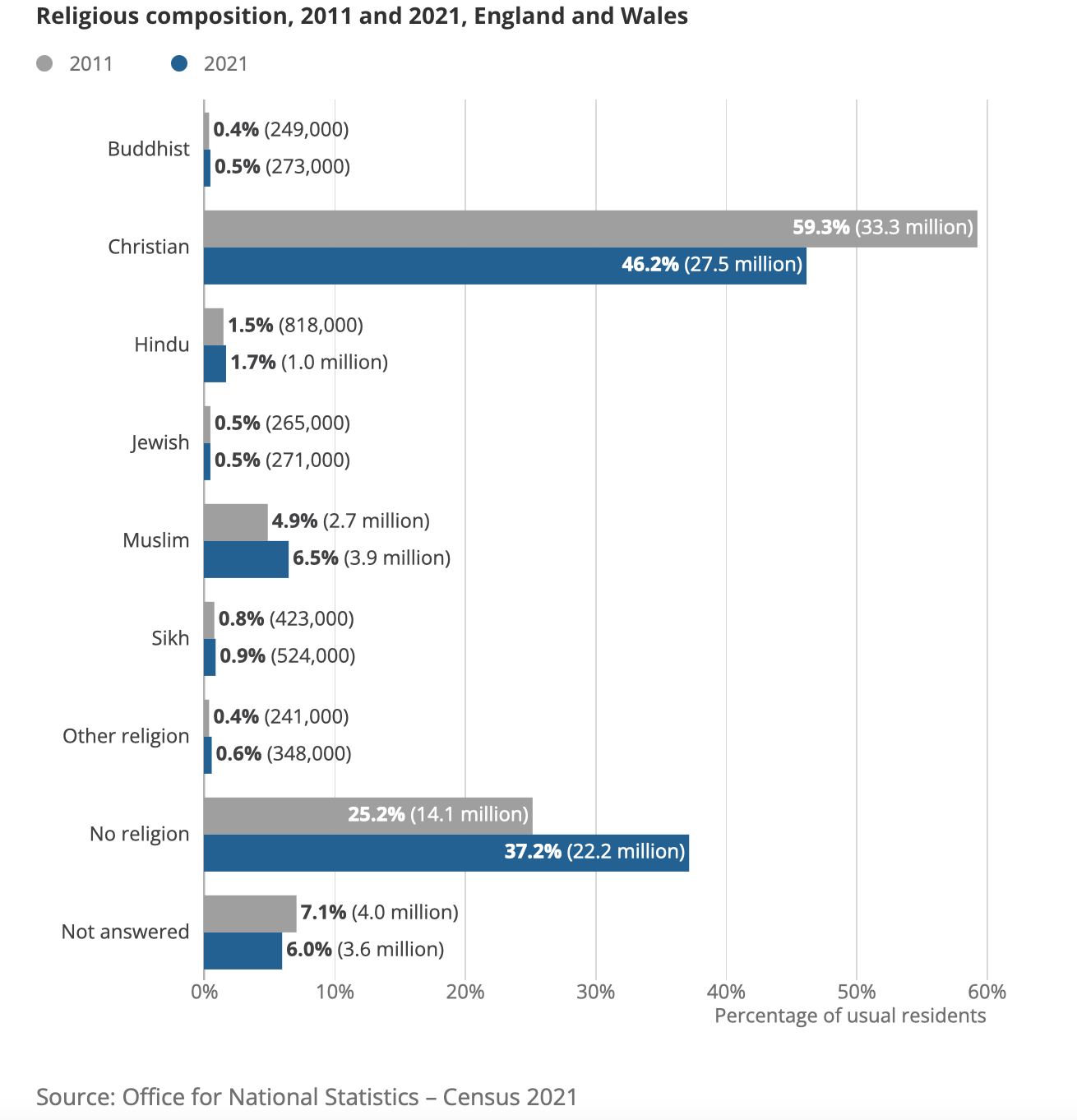

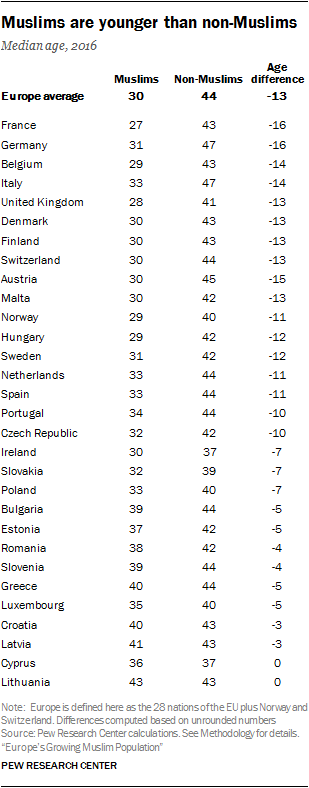
I think the system has failed at this point, when you are expected to work that long.