I used a friend's phone to look at some website and was horrified that the website had added ads everywhere since the last time I visited! Then I noticed he was using Chrome, which doesn't have adblock, and apparently the web is just terrible.
Most people don't realise this, but on Android, setting private-dns [0] or using local VPN apps like blockada / dns66 or intra+nextdns [1] / intra+adguard-dns [2] would block ads even within apps, provided they aren't doing their own name resolution [3]. It allows one to use Chrome for websites that don't work well or at all with Firefox+plugins; in addition to helping bypass censorship.
In my experience they slow down browsing quite significantly, almost down to 2G speeds (may be a quirk of the Oxygen OS?) Thankfully Firefox Mobile with uBlock works fine.
iOS / Safari / Content Blockers are not as full-featured as Android / Mobile Firefox / uBlock Origin, but I'm quite content with https://1blocker.com/ , it provides several lists (with a less stringent limit than the crippled webRequest API discussed here) of rules to pick from, and the possibility to create your own rules through a Safari extension.
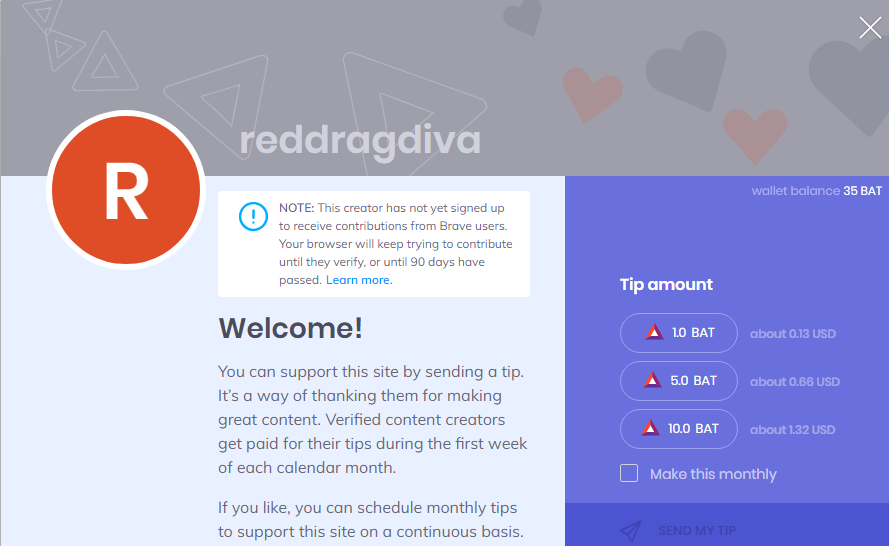
That's not even close to a facebook shadow profile. It was a way to donate to a public creator page. It didn't track anything.
They have also fixed the issues. The page makes it clear when someone has not opted in, and in that case it won't use profile images or names and the tip won't go through.
Too bad they're trying to monetize it. The new Basic Attention Token icon in the URL bar takes up so much real estate that it's almost pointless to have a URL bar in the first place.
"New and existing technologies could affect our ability to customize ads and/or could block ads online, which would harm our business.
Technologies have been developed to make customizable ads more difficult or to block the display of ads altogether and some providers of online services have integrated technologies that could potentially impair the core functionality of third-party digital advertising. Most of our Google revenues are derived from fees paid to us in connection with the display of ads online. As a result, such technologies and tools could adversely affect our operating results."
I personally use NetGuard which is free and open source. It works by setting up a vpn locally combined with a hosts file to send ad requests to a blackhole. This works on the Web and in apps. Follow this guide here: https://github.com/M66B/NetGuard/blob/master/ADBLOCKING.md
actually the Adguard for Mac can work the same as Adguard on Android... so even when Google removes adblockers you can still block on network level (though not as good of course).


Thank God for Firefox Mobile.