I'm a bit skeptical of arguments of the form, "You should not use LLMs without disclosure because LLMs at bad at writing."
My reasoning is: If LLMs get better at writing—which I think is extremely likely—will you switch positions and say that now using LLMs without disclosure is A-OK?
Surely some people are willing to bite that bullet and say yes. But for most people, my guess is that the answer will remain no. Thus, I tend to think that the "real" reason most of us don't like it when people use LLMs to write without disclosure is that it's misleading: It's a sort of a claim that certain thoughts can be attributed to a human being when in fact they can't.
(The em dashes in this message were rendered using keyboard shortcuts.)
This misunderstands what it means to be better at writing. Root cause here is that writing is how humans communicate ideas. An LLM written thing isn’t doing that, it’s something equivalent to copy/pasting a Wikipedia article. Even if the writing gets better, it will still be necessarily empty when expanding anything that isn’t completely specified.
LLMs seem already to be pretty good at translating, where you already have something fully written and are changing the language. It’s when they get rough ideas and fill in the gaps you get the empty prose they are known for.
> Root cause here is that writing is how humans communicate ideas.
Writing is a way humans communicate ideas. It's not the only way humans communicate ideas. And now, it's not only humans who communicate ideas, we just saw with the OpenAI HuggingFace hack how AI agents were able to communicate amongst themselves by using various hacked websites to opportunistically write notes for later agents to use.
All that "X is a thing only humans do" type of circular definitions will buy you, is to expand the definition of what humanity is. And I doubt that's really what you think.
I think you're missing the context, which isn't musing on what it is to be human and can machines think, but the purpose of Joe Smith's LinkedIn account expressing that he has ideas about X is to convey the message that Joe Smith is interested enough in X to venture an opinion on it, and Joe Smith has actually just set up an automated process to generate content without thinking about X, that perverts the purpose of communicating that Joe Smith is interested enough in X to propose the following ideas he been thinking about...
Similarly if Joe's contribution to his long form "idea" is a couple of bullet points, a program trained on flowery phrasing and a weighted average of everyone else's ideas isn't communicating Joe's thoughts on the topic, it's just adding words.
The debate on whether Claude actually thinks or not is orthogonal to the fact that outsourcing your "thought leadership" to it is avoiding thinking or leading. If I want to know how Wikipedia or Claude summarise wider human thought about the topic, I can find their websites thanks
I get the context, but then the comment I'd replied to would have said that humans get better at communicating their ideas by writing their ideas on their own, rather than that writing is some kind of human-only mode of exposition. It's not.
And nor is an LLM generating text just "copy/pasting a Wikipedia article", you'd think people on HN would be smarter than that at least.
If all Joe Smith is going to do is cat $(which claude) to his LinkedIn, then he'll deserve the poor results he gets from it, but we shouldn't mistakenly say that this will be because LLMs simply cannot write. It would be just as dumb for Joe Smith to do with with a professional human ghostwriter.
> An LLM written thing isn’t doing that, it’s something equivalent to copy/pasting a Wikipedia article.
Nonsense. I’m not sure whether this was ever an appropriate description of what LLMs do, but either way, they have obviously moved way, way beyond that.
Absolutely agree. A modern agent is a sophisticated tool that can link multiple sources together to create a coherent piece of information hyper-specified for an audience. However, if humans have outlines that are expandable by LLMs it makes the most sense to do that as late as possible.
I don’t like reading AI writing either but I’m sure that’s a transitory period. Single prompt text expansions are unlikely to be useful because they’re late-bindable. You could give the original to me and I might be able to understand better.
But a series of steering prompts with various sources brought in is a different story. At that point it’s just a question of whether the agent can put together good information and their current inability to do so is unlikely to mean an inherent problem.
Some kind of UI affordance for this might help: with the agent emitting tags that allow for auto-folding or expansion in a way that allows both concise text and exposition when required by the reader. Mechanical sympathy, but for code executing on a human: good old human sympathy if you will
I don't think anyone needs to disclose the tools they used to write something. Nobody ever disclosed Word's grammar suggestions or spelling corrections, or the fact that they used some autocomplete tool to produce code, so we should they now need to start disclosing this tool. Besides, in it's current state, it discloses itself to anyone paying attention.
I do think people own the output they produce regardless of the tools they use, and if they want to put crappy writing out there with their name on it, that's on them. Even if they do disclose that it was written by an LLM, they're still 100% responsible for the content.
> Nobody ever disclosed Word's grammar suggestions or spelling corrections
And plenty of people have made mistakes that clearly indicate mindlessly accepting such a "correction" when it was wrong (as opposed to just making a typo, or genuinely lacking skill in English, which both generally look different); and it's historically been common to poke fun at that.
> or the fact that they used some autocomplete tool to produce code
Right, because there are really only two options: either it's effectively guaranteed to be what the user would have written by hand anyway, or it's unambiguously wrong and does the wrong thing.
Not at all comparable to LLM prose.
> and if they want to put crappy writing out there with their name on it, that's on them.
The problem is that people who don't care (and quite possibly have no real sense for crappy writing) are vastly more enabled by the technology than people who do.
I don't really care about the tool per se, but if I'm reading some LLM output you give me its utility is awfully limited if you don't also supply the prompt. That's what I'd like to see normalized:
Do not give me LLM output unless you also give me the full prompt text.
Without the prompt I cannot discern what you were trying to do, because the LLM output is basically devoid of any coherent voice. Whether it's code, prose, or pictures don't bother sending it to me unless you also include the prompt text.
[edit] I suspect the fact that people are often reticent to share their prompts says quite a lot about how and why they're using an LLM.
it's often not a single prompt but a tree or rooted DAG of many prompts, with the root node being the final prompt. the prompts on interior nodes might not make much sense without the intermediate responses as well. how would you like this communicated?
Just a chat log would be acceptable. Like an IRC channel log or slack channel history. It would be even better if, say in the case of code, there was a durable mapping between prompts and commits, that way I could follow the prompts linearly and review every commit associated with that prompt. For other forms of output (prose, pictures, whatever) this would also be useful to be able to see the history of its development.
>Do not give me LLM output unless you also give me the full prompt text.
Umm the point is you won't know to ask this question in the first place, and even if you did, you wouldn't have any leverage to demand this because you're a peasant.
Oh please, come on now. Grammar correction (which gets applied to text that you wrote) isn't comparable to LLM text generation. A tool assists a user in a task. LLMs don't assist you in writing: they do it all on their own. There's obviously a continuum here (at what point does a tool become so helpful that it ceases being a tool?), but I think I echo the general consensus.
> in it's current state, it discloses itself to anyone paying attention.
Well, unfortunately, I've still sunk a good bit of time into reading texts that I only realize to be AI-authored part way through. Plus, it's constantly being made harder to discern human-authorship.
I suppose using LLMs to write is like not wiping your ass, and using LLMs that are bad at writing is like not wiping your ass and wearing a T-shirt that says "Wiping is for losers."
I might have smelled something suspicious before, but knowing for sure is worse.
I wonder why people think posting undisclosed LLM writing is any better than posting some other person’s writing uncited. Even if the original author is okay with it, it’s still misleading and dishonest. Or maybe all these people would be fine having someone else write their content for them if it were free and easy? A social media is a reputation economy, but reputation doesn’t work if gaining karma requires no effort.
And it doesn't foreclose the possibility of LLM achieving human-like writing ability. If I stole the writing of a human author much better than me it would still be plagiarism.
Of course, with real books we do have the problem of ghostwriting, where an author willingly writes for a book that will be published under someone else's authorship. That may be where things end up here, with requirements to acknowledge sources, whether ghostwritten for you or written by others.
It's because they view the LLM's output as "their thoughts." They told the LLM (via the prompt) what to do—often with loads of run-on sentences and long trains-of-thought. From their perspective, the LLM is just acting as a translation tool, saving them the trouble of having to think (about grammar, ideal wording, or even the order in which their thoughts should be presented).
They treat it as "just another tool" to improve efficiency. Like using a drill instead of a screwdriver.
Then there's people who are so lazy they give LLMs instructions like, "write a LinkedIn post about how AI is changing the future of work for thumbnail consultants." That's when it moves from "translating your thoughts" to "writing for you."
I think the issue is that it can be hard to tell the difference. We need better terms for these things so we can differentiate use cases.
Yes. If someone tells an author to write a novel based on a vague stream-of-consciousness premise or rough plot idea, that doesn’t make them even a co-author.
Agreed. LLMs for writing is like intellectual catfishing. You are presenting yourself one way in written form.. but that's not who you will ever be once someone has to actually have a conversation with you. And that's wrong.
I agree with the gist of your sentiment, but I struggle with how to reconcile it with my use of these tools.
My use LLMs is precisely because I can never hope to express myself clearly. I have many fuzzy, disparate thoughts and it was a struggle to express them at all before this time in which I can do a long rambling voice transcription (absent of social pressures) and continue doing the same throughout the exploration and drafting processes. In my view, I give them a seed or a morbidly obese skeleton and LLMs take that into something a lot more coherent for myself and for others. I was passive before in my life, now I’m engaging. As two concrete examples: I never would have sent an email to my city regarding snow removal last winter when their failure to remove snow from the only sidewalk going over the interstate. I never would have pulled together my previous coursework and e-mails to send to my current professors in a petition for transfer-credit equivalency when it became clear that my deteriorating health would not allow me to finish the semester as-is. I never would have remembered all the concerns that I want to bring up at medical appointments. That is not to say these things were ever impossible, there are coping strategies available, and whatnot, but I’m in my late 30’s; I know what I did and not get done in the last 10 years, and “AI”-tooling/environments have helped me express my dreams and passions and concerns, etc., etc., etc. over the past years in a way that was simply not practically available to me, with a new capacity that I simply could not previously hope to match due to limited and fragmented time,attention, and energy. While I was hand-typing this on my keyboard, I could have instead been talking, reviewing, redrafting in spurts as I go about my morning, instead of a solid 45 minutes at max effort on my own part, as I did here (and I don’t feel that I conveyed myself half-as-well here as I could have achieved at much less cost to my energy, etc. by using an LLM). I do take offense when people do not review and vouch for things written on their behalf by LLMs.
How do we make room for their use as a cognitive-prosthesis (if you will allow such framing) without losing humane-ness?
A lot of the stuff you wrote about is not what most of us are talking about when we call it intellectual catfishing or say your intellectual fly is open. For example, I have few problems with people using LLMs in private for purely personal things. I still won't go ahead and recommend it, but it's a decision we can all make for ourselves. Also, writing an email to your city is something you could ask your assistant to do if you were super rich, and using the LLM to do it isn't that different, so I'm not going to judge you for that.
As a more nuanced case, someone could dictate a long rambling stream of thoughts full of contradictions to an LLM to transcribe and summarize, and then they could reflect on the summary and write the real thing themselves. That's like talking to someone about a subject and writing about it afterwards, and also not something I would really take issue with.
That's my partial answer to the cognitive prosthesis question: keep it off to the side as a tool to help you do the work. There are still many caveats here, and the more complex the demands you make of the LLM, the greater the risk of some kind of break down. For example, continuing the example in the previous paragraph, if I did have the rambling conversation with an actual person who helped me refine and clarify my thoughts, I have some kind of mental model for the dialogue partner that can help me correct for some biases. With an LLM, anything resembling a mental model I could have would be very far off the mark, so I would need to be aware that I can't treat its output the same way I would treat something written by a person.
(By the way, for myself I have a stricter rule: I would only use an LLM in a way that made me a better person independently of the LLM and not dependent on the LLM, and thus I don't use them at all. That's what I actually recommend, but I don't expect everyone to adopt that rule.)
My main problem with having the LLM just do your writing is that it's simply a misrepresentation. It's wrong to claim you wrote something unless you chose the words. I really empathize with the struggle of expressing oneself clearly, but there's just no getting around this. And to be clear this isn't something pedantic or just a technicality, since the act of formulating a thought in an actual human language with valid syntax does require a level of care and attention that simply is not there unless you do it yourself.
Really? I seriously believe that people that think this way underestimate their self, especially if they're going to be sharing something valuable.
> How do we make room for their use as a cognitive-prosthesis (if you will allow such framing) without losing humane-ness?
As many others have expressed, we'd love to read the prompt (and the model's chain of thought if you have it). This scenario is like talking through a person translating things to each other, except from the recipient's perspective, the translator is absent from the conversation entirely.
Additionally, disclosing LLM usage is low hanging fruit to differentiate yourself from the 100x other people who "do not review and vouch for things written on their behalf by LLMs". If the LLM converted something unreadable (whether due to a language barrier or incoherence) to text relevant to people on the other end, and THEN they disregard it anyway, the fault is not on you for them dismissing the writing too early.
Wow, you must be one very unique and special person if you converse the way you write. By definition, a carefully written and edited piece will be much more refined and cogent than an extemporaneous conversation.
Just watch an interview with a famous author. Or compare a legal brief to what court actually sounds like.
I've engaged with people at work where they led with an LLM via slack before I connected with them on a call. It's quite jarring and disappointing to see the gap in cohesion and knowledge going from one form of communication to the other.
If you're using an LLM to tidy something up, that's one thing. If the LLM is your voice and is supplanting your knowledge, I might as well cut you out and talk to the LLM directly.
I agree with the sentiment with a small caveat, since IMO good writers don't write the way that they talk. The very simple reason is that you can revise your writing but not your talking. But yeah, I completely agree that using an LLM to write your words is intellectual catfishing, and that's a great way to phrase it.
I'm in the process of writing a pretty long essay that has taken a few months. I've written the first draft, and I'm almost done with the second draft, which incurred substantial revisions. At the end of the process, maybe no sentence will be something I would actually utter in person, but the writing is still something I created, and as such, it is a representation of who I am as a person. Had I used an LLM to do any of the writing, that would no longer be the case, and the writing would at best represent me as a person when the LLM is at my side, and at worst (and most likely) not really represent me at all.
> You should not use LLMs without disclosure because LLMs at bad at writing.
That's not how i read the article. The author more-so claims that the proof of effort by a human was large part of the credibility to the writing; Proof that the author of the text has thought it through and come to their convulsions though effort and reflection, and spent effort articulating that into words they expect other humans to find insightful.
If i see LLM signs; did the author just rephrase with AI model or did a AI model content farm produce the whole post based on the prompt "write a inspiring linked-in post"?
Disclosure of LLM use is simply the author addressing the concern and building a case for why the article is worth reading.
'Without disclosure' is about taking credit for work that isn't yours.
WP defines 'ghostwriter' as: "a person hired to write literary or journalistic works, speeches, or other texts that are credited to another person as the author."
Anyone could choose to go through life relying on a reputation manufactured from many lies. They might want to think about how hard that reputation will hit the ground, if it does.
They definitionally cannot, for the definitions implied in the argument. The point is that good writing is a thing humans are capable of doing because they are human.
> It's a sort of a claim that certain thoughts can be attributed to a human being when in fact they can't.
Yes. And this is a requirement of "good writing" as understood here.
People shouldn’t pass off largely unedited AI writing as their own, but I’d much rather live in a world where that writing would be of high quality in both form and content, than in the world we live now. In that sense, lack of disclosure is the lesser evil.
> If LLMs get better at writing—which I think is extremely likely—will you switch positions and say that now using LLMs without disclosure is A-OK?
If LLM writing improves to the point where they can infer the business (or other real world) context and serves the functional purpose of informing others as opposed to being an intellectually lazy piece being produced only for the purpose of being produced, then I’d be fine. It’s likely the author would need to spend some effort on the said piece of writing, regardless of how good the LLMs get good at writing.
Someone's actual writing (or talking) is a rich stream of information about who they are, their motives, their preferences, modes of persuasion, and so much more. Undetectable LLM writing essentially allows someone to assume another person's identity. That is not good for anyone except the person trying to pull off a "scam" of some sort, in the broadest sense of that term. It's bad for everyone else, and for society at large.
"Productivity" is not. It's only good for fake productivity. The consumers of the product will almost always be better off with you disclosing what the LLM did, and what you did.
Some people type 100x more words than the final article just digging into a topic and turning it on all sides. The final article being generated tells you nothing of the size of the effort going in.
I think, there's a systematic flaw in RLHF: constructs reinforced as effective or sophisticated style will always suffer overuse and significant overexposure. Which will be also very obvious when used out of the intended context, it's copied from. There will be always a "smell", something that causes us to turn our backs to these texts, and possible the supposed authors, as well.
There's also the problem that certain types of phrasing are perceived as effective, because they mark a pivotal point in the progress of the text and are, as such, used sparingly, but are now becoming everyday templates that incorporate whatever is available in the context. There is no way this passes the Turing test of a competent reader.
And there's yet another issue: in social research, there has been the concept of semantic position, indicated by deviation from the mean (or median). If you don't deviate from the mean, your semantic position is zero. There's simply no expression. In this sense, next token prediction really amounts to a desemantificiation of the context. There's really no sense in uttering any of these productions, no plausible motivation, other than for the purpose of raising you hand to be seen.
I just feel like technology companies keep proving over and over that they are more than capable of forcing us into new behaviors regardless of our actual preferences. Once the domination is complete nobody will know what was lost in the process anyway.
When I can get an LLM to write like Isaac Asimov, I'll consider some artificial literary experiments; there were books I wanted him to have written that he did not get around to, quitting at 458.
I agree. LLM writing is atrocious, but people also want LLM writing to be atrocious in many cases, because they don’t like LLMs.
The worst of this is with image/video AI models, where the results today, although still very imperfect, some people will still pretend like it’s awful and the worst thing they’ve ever seen. They refuse to admit the technology is at all impressive or making progress because they don’t like the technology.
I don’t like AI generated images and video either, but I can regrettably admit that the technology has gotten remarkably better over time.
I agree that there can be a tendency to conflate the two things: how advanced the technology is, and how aesthetically pleasing what it produces is. It's also important to remember that we're not obligated to like something just because it's "pretty" or has high aesthetic value in some abstract sense.
I'm having a little trouble understanding what you mean.
> I agree that there can be a tendency to conflate the two things: how advanced the technology is, and how aesthetically pleasing what it produces is. It's also important to remember that we're not obligated to like something just because it's "pretty" or has high aesthetic value in some abstract sense.
You're right that my problem is people conflating two things, but I have no issue with how people interpret the "aesthetic outputs" as you put it. The part I'm having trouble with is the obligation you imply, that we have to "like something just because it's 'pretty' or has high aesthetic value in some abstract sense."
I for one, think that LLM art looks terrible--the output is something I often dislike aesthetically. This is a matter of taste, and similar to the question of "do I like it and want to engage with it", you're free to make your own judgements here. There is no "right" or "wrong" answer with aesthetics.
However, with the questions of "do I like the technology" and "has the technology advanced", whereas one is similarly a matter of taste, the question of "has the technology advanced" is one that can be answered objectively. Of course it matters what your trying to measure, but take realism for example--something that AI image labs often try to perfect. The fact that the AI labs have gotten drastically better at generating realistic content is undeniable. While it's up to you if this matters, whether realism has advanced can objectively answered yes or no, without bringing taste into things.
I am making no claims here concerning the "high aesthetic value in some abstract sense". I don't think such an objective value of aesthetics exists. Does this clear things up?
I mean, these things can be tested. Maybe some people really are gifted at discerning AI work, and of course there's no accounting for taste. But the former is subject to objective evaluation, and the latter should at least be somewhat expressible.
>I'm a bit skeptical of arguments of the form, "You should not use LLMs without disclosure because LLMs at bad at writing."
That’s not the argument. The argument is “LLM’s tend to write the same way all the time regardless of who prompted it.” You can't call it “your writing” if you’re using the same tool millions of others are using that boils your idea down to the same reduction as everyone else’s.
Use an LLM to assist? Cool, go ahead. Prompt, ctrl-c, ctrl-v? Go fuck yourself. I can’t be expected to put more effort into figuring out your take than you out into communicating your take to me.
> If LLMs get better at writing—which I think is extremely likely—will you switch positions and say that now using LLMs without disclosure is A-OK?
I would say it is certainly significantly more ok. There are two reasons reading AI-generated text sucks now:
1. It's usually low value and not trustworth - I could have just asked the AI myself.
2. The prose style is horrible to read.
If we eliminate the second reason then it's definitely an improvement. (Although on the other hand the terrible prose can be quite a helpful indication that you're wasting your time reading slop, so maybe we shouldn't complain about it!)
> 1. It's usually low value and not trustworth - I could have just asked the AI myself.
You have no way of knowing what the input to the writing was. You're making the erroneous assumption that the person posting the article was a mouthbreathing spammer who used the prompt "write me an article on subject XYZ, make no mistakes!" and you could have supplied the same prompt.
Yeah that's the point. Spammers have an infinite desire to make more spam, so statistically most LLM writing is garbage.
Readers are making this connection from their own experience. All these tells just associate it with garbage.
In the before times, sending a formal document full of typos and errors would show you didn't bother to proofread, now having a doc full of lazy "LLMisms" also looks like you were too lazy to proofread.
1. Facts and processes. I just want to know something. I do not care if some Nerds for Nginx article is AI written.
2. Opinions and experiences. I want to know a human is writing because emotionally engaging with an AI isn’t building a stronger society - it’s increasing isolation.
3.
In another front, I feel like the value of an AI story cannot be greater than the value of the inputs. If you wrote a two paragraph prompt and an LLM produced a 10 page story, the truth is, it’s only worth two paragraphs. That’s just a feeling, but as of now I don’t think the LLMs have any additional life experiences to draw on to increase the value of their storytelling. (I understand this is debatable, but still- what they offer is available to everyone for now; it is a baseline.)
> You're making the erroneous assumption that the person posting the article was a mouthbreathing spammer
Yes, that's the risk of using an LLM to "clean up" your writing. It's human nature to think you're unique and everyone else should somehow instinctively realize your output is unlike all the LLM spam garbage and worth their time but that doesn't work in practice.
It's unreasonable to expect other people to suppress their intuitive heuristics formed from the bait and switch of being subjected to endless LLM spam every day and blame them for not giving you a fair chance.
I think you're getting a lot of unfair pushback on this, when you're making some excellent points. Just to clarify, I think you're making these points:
- Existing air pollution causes a ton of harm.
- Realistically, the optimal amount of air pollution is probably not zero.
- Logically, we should treat the cost/benefit of adding this "new" air pollution the same as the cost/benefit of removing existing air pollution.
- As an absolute number, the harm caused by this facility is very large, but as a percentage it is tiny.
People seem to be interpreting your conclusion as, "therefore it's completely fine to build this facility because only percentages matter, not absolute numbers." But I think your conclusion is more like, "our society has a complex relationship with air pollution and our existing choices reveal that we are willing to accept some air pollution sometimes, so you have to do a cost/benefit analysis, not just look at costs."
(Author here) I've added the word "indoor" to the title, which will hopefully make it harder to miss that this is not about climate change or carbon sequestration.
As somebody who works on carbon dioxide removal at planetary scale, I was excited about your article about indoor air… but nearly every comment here seems to want to talk about the changing climate!
I don't want to stop anyone from debating the merits of using plants for carbon sequestration. But the ones explaining why my article did such a bad job of explaining those merits are kind of eye-opening, yes.
Same here, I wonder if there’s some missing conversation in the hacker news community about climate. Seems like some people really wanna talk about it even off topic.
I get to spend plenty of time working on climate already, so I was particularly interested in the indoor air pieces. Someone below suggested there’s a ventilation system alternative. I wonder what you could do with a little miniaturized direct air capture machine. Probably crazy energy inefficient and whatnot, but maybe a cool experiment.
Long ago I ordered an indoor algae system from a couple of CMU PhDs. It is very cool, it looks cool and has a nice water flow backgroundy sound, the algae grows quickly, allegedly doing the co2 consumption equivalent of 20 houseplants. Space efficient! But immaterial relative to human co2 production.
If it was circa 2010 I think I remember those guys. It was partly for people who wanted fresh algae smoothies?
How big a tank do you need to remove 1 kg of CO2 per day…
It's an interesting article overall, but this assertion:
> Carbon dioxide is bad for cognition.
is dubious and unsupported by science. As I point out downthread, we have extensive experience with very high-CO2 environments-- at levels regularly exceeding ten or twenty times current atmospheric levels-- and as yet little good evidence of uncompensated cognitive effects.
Beyond that, modern humans live much of our lives in moderately elevated CO2 with no apparent ill effect. Without deliberate ventilation, any enclosed space like a bedroom or classroom will rapidly achieve elevated CO2 levels, often into the thousand ppm range. Again, we have lots of data, and little of it points to a practical cognitive effect.
The US Navy maintain an informal goal to keep levels on board submarines to below 8000 ppm, loosely informed by what little evidence they have of its effects on crew performance. That's twenty times the current atmospheric levels. In practice, CO2 levels often go over 10,000 ppm, which apparently still doesn't cause them much concern.
I'm open to the possibility that this is wrong, but as far as I can tell, the conventional scientific view is that high-CO2 environments are somewhat bad (although not catastrophic, even at 8000 ppm).
This looks like a good review, and it definitely pertains to your effort here. Although the authors play up the positivity of their conclusions a bit (which is useful if they want to continue the research), they are also honest about the limitations of the material they cite. Many positive correlations are cited, but nearly every paragraph is laden with caveats. Here are a few pulled at random:
> However, the relationship between CO2 concentrations and upper respiratory symptoms in this study was no longer statistically significant after adjusting for the number of people in the office
> A 100 ppm increase in CO2 concentration (range, 549–1318 ppm) was positively correlated with non-specific symptoms including headache and dizziness (107 participants from 11 offices) although the correlation was not significant
> Several epidemiological studies indicate a relationship between low-level exposure to CO2 and BRSs. However, BRS is possibly influenced by other comorbid indoor pollutants, including artificial volatile organic compounds (VOCs) brought into buildings or occupant-generated pollutant
> CO2 concentration at 5000 ppm had no effect on acute health symptoms (respiratory, visual and skin-related, headache, and sensory) and performance in cognitive tests (Zhang et al., 2016).
> the relationship between low-level exposure to CO2 and the reported symptoms remain inconsistent between studies
> A relationship between low-level exposure to CO2 and BRSs is therefore very complicated to prove and strength of the evidence is very limited.
My biggest issue with all of this is that we have a ton of data from very high-CO2 environments going back decades, and still very little clear evidence of negative effects. If high CO2 concentration imposes significant cognitive costs for which the human body cannot compensate after some period of time, it seems like that signal should have become clear by now.
Did you consider the alternative calculation of how many plants you need to grow to feed yourself? A few thousand potatoes growing simultaneously might do it.
That would overestimate the number you need to remove excess exhaled CO2, since you could throw out the parts you can't eat rather than letting them decay and release CO2 indoors.
It might not be clearly worded, but 132.5 watts is the power used by 2 incandescent light bulbs, whereas 918 watts is the power present in the light produced by 765 light bulbs. The factor of 50 comes from the fact that incandescent lightbulbs are only ~2% efficient at turning power into light.
Like most people, surveillance pricing feels gross to me. But I think we need to separate two things: Surveillance pricing is a combination of (a) price discrimination and (b) surveillance.
If it were up to me, I'd probably give people much stronger legal rights to control their personal information, which would in turn decrease "surveillance".
But I haven't seen a convincing argument to ban price discrimination. There seems to be some kind of implicit assumption that price discrimination reduces consumer surplus on average. But I've never seen a convincing argument to that effect.
For example: Pharmaceuticals are often priced much low in poor countries. That's price discrimination. (You could think of it as a primitive form of surveillance pricing.) But if that were banned, pharmaceutical companies wouldn't lower prices for everyone. That would destroy almost all their revenue which comes from high prices in rich countries. Instead, they'd charge rich-country prices to everyone, and most people in poor countries would simply have to go without. That seems like it would be pure harm.
It's entirely possible that some kind of "coarse" price discrimination is OK/good but "fine-grained" price discrimination is bad. But where's the argument?
Well for one it undermines the currency by making my dollar worth something different from your dollar, makes it impossible for individuals to make informed choices, and makes it so that there's no reason to try to be more productive/chase some higher paying endeavor since it will be extracted for your basic necessities anyway and you'll end up in the same position. So now labor price signals fail.
We already see the results of this in the US in the medical and educational systems, where planning is nearly impossible because the price is hidden until purchase (or even afterward) and the other side is trying to price it at "whatever you have". Unsurprisingly, both of those have absurd debt loads and are causing society-wide discontent/destabilization.
Now imagine that grocers can individually price to you, and you find out what you owe (and whether you need to put some items back) at the register, and this information about you is available to be purchased by anyone so all available grocers have that same knowledge. What are you going to do?
> It's entirely possible that some kind of "coarse" price discrimination is OK/good but "fine-grained" price discrimination is bad. But where's the argument?
This seems entirely reasonable - they're obviously a point where tax rates are too low and revenue isn't being brought in, but also a point where tax rates are too high, incentivizing tax shelters or outright crime, and revenue starts decreasing again. The price discrimination side is the same thing just on "optional" purchases instead of taxes so it makes sense there is some Laffer curve corollary.
It's not necessarily obvious that tax rates can be too low. If you're a government and you issue the currency, you can get much of the same outcome as taxation by printing the money you need to spend. What you don't get by doing that is natural redistribution the way graduated marginal rates give you. You have to spend to redistribute.
You get too much inflation that way. Taxation is a mechanism of destroying currency to cause deflation to offset the inflation caused by government spending.
Price discrimination isn't about wealth. A poor person who books a flight the day before because of an emergency pays more than a rich person who books it 3 months out.
Pharmaceuticals lobbying hard to get the UK to stop buying drugs on the national level (where they have enormous pricing power) and make hospitals responsible for buying drugs. This would be terrible for the UK.
For airline tickets, it's mostly not about wealth yet, at least on U.S. domestic routes. I know that for some international tickets, especially between a rich country and a poor country, the price can be different depending on whether you are buying in the currency of the rich country or the poor country, and I think, if it's a round trip, whether it's originating in the rich country or the poor country.
You really see this in spades with Uber/Lyft though. I've often compared Uber prices with friends of mine and there can be a big difference for the same trip at the same time with two different people.
This phenomenon unfortunately makes me much less bullish on the AV future, because robotaxi providers will try to do this to extract the maximum cash out of users. Someone who decides to sell their car and just take automated rides is going to get gouged because the algorithm is going to figure out that they have no alternative.
One thing I've found with a lot of adversarial algorithms is that you have to demonstrate to the algorithm that you have an alternative. For example, if you consistently check prices on the Uber and Lyft apps and pick the lowest cost one, they will notice when you price out rides and then don't take them, and you will get better prices.
Similarly, with feeds, I have been finding that Facebook and YouTube want to push me short video content, even though I don't like it and don't watch it. You can push the button that says "Show Less" or "Not Interested", but they generally don't care. What works is when they show you something you don't like is to close the app and do something else. That is a signal that they respect.
> You really see this in spades with Uber/Lyft though. I've often compared Uber prices with friends of mine and there can be a big difference for the same trip at the same time with two different people.
This even happens with your own Uber accounts- when I'm logged into my work Uber account the prices are always $5-$25 more expensive but if I toggle to my personal Uber account they drop immediately for the same ride. I asked our work accounting team (with screenshots!) if I could just use the cheaper ride via my personal account and expense it to save the company money and they said no lol.
>You can push the button that says "Show Less" or "Not Interested", but they generally don't care. What works is when they show you something you don't like is to close the app and do something else. That is a signal that they respect.
I just added a rule to uBP to delete the element from the DOM.
Yeah, surveillance pricing might sometimes result in poor people paying less because they care more about low prices, but it can just as easily result in them paying more because they have less economic power.
If we want to subsidize poor people, we should probably just transfer money to them instead of trusting for-profit companies to charge them less.
>But I haven't seen a convincing argument to ban price discrimination.
It's in the name. Does having a Mexican person pay more for taco shells than a Caucasian not immediately ring legal bells?
>Pharmaceuticals are often priced much low in poor countries. That's price discrimination. (You could think of it as a primitive form of surveillance pricing.)
That's not surveillance pricing in the same way that utilizing local cookies isn't personal data farming. It's the first step to a much more nebulous web, but no one is saying that businesses can't price based on the area. It's only when amassing millions of user's data that unexpected trends arise that such data becomes dangerous.
> But I haven't seen a convincing argument to ban price discrimination.
The very definition of "price discrimination" is the convincing argument.
    "How much does this candy bar cost?"
    "Well, you social credit profile says you payed $700 for pair of shoes last week so... twelve grand."
    "But the guy in front of me just paid 35 cents for the same candy bar."
    "Well, I mean, *he* is white."
Meanwhile, dynm:
> But where's the argument?
Looking to big pharma for guidance is depressingly hilarious.
>The very definition of "price discrimination" is the convincing argument.
>...
Your inflammatory wording is doing a lot of the heavy lifting here. Remove that and it seems far more acceptable
    "How much does this candy bar cost?"
    "$3"
    "But the guy in front of me just paid $1 for the same candy bar."
    "He's rewards club member so he pays the members' price of $2, then used a $1 off coupon on top"
You didn't remove the inflammatory wording, you quietly swapped their argument for a completely different one.
Coupons are not the same as surveillance pricing, because coupons only adjust the price down. They're the way manufacturers get people to try products they wouldn't have bought otherwise. Very importantly, coupons are used by very few people, most still pay the retail price, which forces that price to still remain competitive. Also, anyone can choose to use or not to use coupons. Surveillance pricing is a mandatory price cut or hike that's assigned to you personally by seeing how desperately you want an item and how much you can afford to pay. It's just abusing your customers for the last scraps of cash they have left in exchange for the same product.
Member-only prices are closer to surveillance prices because they make you trade away your purchasing and location data, or even enter some kind of a financial contract with the company, in exchange for a lower price. But it's still nowhere as evil because most people still pay the normal retail price, so the difference between the two prices can't be too disconnected from reality, and because the hoops they make you jump through are still technically free, so it's not dependent on your ability to pay.
Poor countries aren't in danger from this... we can't ban price discrimination in other countries because they have sovereignty, and the pharmaceutical company isn't monolithic. The one operating in another country is another corporation that must follow that countries rules, and will be granted a license from the American parent company to decide for itself what pricing to impose there (which will be controlled by that country's laws on drug pricing).
It's how it works now, and we don't much have the ability to change that. If we tried, the pharmaceutical companies would be in danger... those countries can spin up factories to make the same drugs and just ignore the patents. A behavior/strategy they want to avoid encouraging.
Different countries use different money, and also if they sell in the place then it can still be a price for the different place, which does not necessarily involve surveillance, nor does it necessarily involve hidden fees, etc.
(If they try to prevent someone from buying them and using them elsewhere or buying one for a specific other person who requested it who they do not know, then that is different, but it might lead to different issues (e.g. liability of tampering with medications, different regulations in different countries, etc).)
There are two ways to legally "earn" money. The first is to provide a product or service that is sufficiently valuable the buyer willingly parts with the money for the price.
The other is extractive — to find a way to exploit the customer with limited choices and extract the maximum value from them. Monopoly pricing is the primary example — people need electricity, housing, food, etc. and if someone corners those markets, or colludes, they can extract a far higher amount of money from people than they would willingly spend in an actually free market of multiple competitors and fully available information (wherein another competitor would offer prices closer to the cost of production and take the business from the overpriced competitor).
Production of value is the essence of the value of capitalism. Extracting value by coercion is fundamentally corrupt, and at the extreme end is nothing more than mob rule ("nice store windows you got there, it'd be a shame if something happened to them; pay us for protection").
Surveillance pricing is simply a fundamentally dishonest form of the latter, exploiting massive amounts of information on customers to extract more money from a person than they would be freely willing to pay for a product, because you found a temporary or permanent vulnerability and 'have them over a barrel'.
A society that permits surveillance pricing will inevitably become more impoverished because the few players doing surveillance pricing will extract more money from the society WITHOUT creating any more value. This impairs everyone else's ability to provide value.
Allowing it is fundamentally stupid and self-destructive.
>A society that permits surveillance pricing will inevitably become more impoverished because the few players doing surveillance pricing will extract more money from the society WITHOUT creating any more value. This impairs everyone else's ability to provide value.
Why can't it be both? SpaceX created starlink, which I don't think anyone doubts is "a product or service that is sufficiently valuable the buyer willingly parts with the money for the price". Yet at the same time it engages in price discrimination. They have different service tiers with various restrictions placed on them. For instance, the cheapest tier costs $55 but must be stationary. The unlimited aviation tier costs $200k[1] but works on a plane. While I'm sure there's some cost differences between serving the first plan vs the second, it's pretty clear there's some discrimination going on. Does that SpaceX is "extracting more money from the society WITHOUT creating any more value"? Would society be better off if starlink was forced to charge one price?
Good distinction! Varying service tiers are different from surveillance price discrimination.
It is not a difference for each person; it is a difference for a different category or type of person or service.
It is not exploiting spying on a person's private life and seeing when they are desperate or get the DGAF discount.
The SpaceX stationary/mobile distinction actually provides a better service - for more money, you get to move around. I'm not sure if it puts any higher load on the system but my guess would be the excess profit exceeds the extra cost of tracking a mobile terminal.
They aren't great, but are at least fair. Airlines have also been doing it for decades, beyond economy/biz/first but also cheaper if your flight includes a Saturday stayover (extra $$ for typical biz travelers) and far more sophisticated schemes now.
Similar for parking lots charging more per hour during business hours vs nights/weekends.
The key is the category-type prices are not exploiting an unfair advantage by prying into individual customer's private lives.
Is it on a similar (slippery) slope of charging more without providing more value? Sort of. But they really are very different things.
i expect rather than being a couple stores doing it, it will be a separate company acting as a cartel across stores forcing some people to always pay more no matter where they go
Americans pay more taxes for healthcare than Europeans do. And it doesn't even give them healthcare, so then they have to pay again to buy their healthcare. And then when they get to the hospital they find it's out of network so they have to pay a third time.
Your local water monopoly has perfected price discrimination. Since water is a necessity, the water monopoly sets the price of water to "everything you own".
>Your local water monopoly has perfected price discrimination. Since water is a necessity, the water monopoly sets the price of water to "everything you own".
This says more about monopoly power abuse than problems with "price discrimination". Food is also essential, yet prices don't rise to "everything you own" (even for the poorest) because of competition.
That's called "the consumer price surplus". It's one of the major reasons that market economies are better for everyone than command economies. And it's the antithesis of price discrimination.
You're right about monopolies -- price discrimination is a symptom of monopolistic pricing powers. It's not that price discrimination should be illegal, it's that successful price discrimination is a strong symbol of monopoly, and the FTC should be cracking down.
Patents and copyright are legal monopolies. Price discrimination is rampant in fields like pharmaceuticals and software which use these. If we can't get rid of the monopoly, at least we should crack down on price discrimination.
>That's called "the consumer price surplus". It's one of the major reasons that market economies are better for everyone than command economies. And it's the antithesis of price discrimination.
I'm not denying this exists, just pointing out your Reductio ad absurdum is absurd and fails rhetorically. If your point is that without surveillance pricing legislation, people selling us essentials will milk us for the last dime we have, that simply isn't happening today.
> It's not that price discrimination should be illegal, it's that successful price discrimination is a strong symbol of monopoly
This isn't obviously true. For instance, airlines engages in intense price discrimination, with different fare classes, discounts, and changing princes per day, yet the industry has famously poor margins - the exact opposite of a monopoly. Same for games and movies (they get heavily discounted after release), and while you can argue the copyright system gives them a monopoly, it's only on that particular work. There are plenty of other games or movies to choose from.
> If your point is that without surveillance pricing legislation, people selling us essentials will milk us for the last dime we have, that simply isn't happening today
They don't even need surveillance pricing, they already try to do it. This wasn't some 1920's scheme, this was very recent.
It seems to me that the level of surveillance we're talking about, with dynamic pricing, would make it both easier for them to gouge and harder for price fixing to detect. Win win for slimy capitalists.
Edit: so maybe you're right that given the opportunity, no one is trying to milk you for literally every dime you have. Still, we should probably not allow businesses to milk the average person for every dime they can get away with, either. That's still bad for society.
>For example: Pharmaceuticals are often priced much low in poor countries. That's price discrimination. (You could think of it as a primitive form of surveillance pricing.) But if that were banned, pharmaceutical companies wouldn't lower prices for everyone. That would destroy almost all their revenue which comes from high prices in rich countries. Instead, they'd charge rich-country prices to everyone, and most people in poor countries would simply have to go without. That seems like it would be pure harm.
Well you simply make it illegal to charge more than the poor country prices and, bare with me here, you also make it illegal to go bankrupt.
I think very few people are thinking about the harder economic arguments here. We know that if companies are drawing prices, they'll do it in the way that most hurts the consumer and most benefits the company. Or more realistically, in the way that the company _perceives_ it benefits them the most.
I'm not necessarily opposed to the ideas you're talking about, I just have zero faith that anything positive will be stood up if companies have their say.
In the real world, the best examples of price discrimination I'm aware of are lowering published prices for those who can't afford as much. Wwre you thinking of another example?
For what it's worth, I have a markdown-based website with a domain I own, and I stubbornly link to that website only, treating substack as just a temporary distribution channel.[^1] And I am constantly, endlessly asking myself if all the extra friction I've added to my life is worth it.
[^1]: I can't stand how slow and tracking-heavy substack is, but the problem of "send email and not get filtered as spam" is non-trivial.
Perhaps on brand for Meta, there appears to be no mention anywhere on this page or any of the docs pages, of any data retention policy. Maybe this is hidden in an agreement you need to sign when making an account? Has anyone actually done that?
My personal hot take is that we should all be using zinc (or titanium) oxide sunscreen which AFAICT maxes out both effectiveness and chemical safety. (And is the best for the fish?) Interestingly, these are the only ingredients that the FDA currently deems both safe and effective.
My wife is black and has sensitive skin. She once tried zinc oxide sunscreen. If one wants to be protected from the sun while cosplaying as purple monster, it's a great choice.
This truly is the biggest drawbacks. It's almost impossible to make zinc sunscreen see-through. One technique is to micronize the zinc but this comes with its own set of risks including skin penetration and environmental risks that micronized zinc can pose to aquatic life.
I think the only solution is to embrace it. There isn't really a 100% safe sunscreen that is also invisible
Sunscreens that use zinc/titanium dioxide as active ingredients are often so unpleasant to use that people don't apply enough of them or refuse to use them. The "nicer" sunscreens that use these ingredients often sneak in SPF boosters which are actually derivatives of other chemical sunscreens but are treated differently on the ingredients label, pretty much cheating the system.
> The "nicer" sunscreens that use these ingredients often sneak in SPF boosters which are actually derivatives of other chemical sunscreens but are treated differently on the ingredients label, pretty much cheating the system.
Interesting, thank you for pointing this out. I had a little trouble understanding what the link was saying at first, but it seems to (correctly) state that many "mineral" sunscreens contain active chemical ingredients like butyloctyl salicylate. (And they're sometimes labeled as non-active ingredients?)
I think the idea of listening to the FDA's untested opinions on what is effective and safe need to be carefully reviewed.
Here's a simple approach to UV A,B and High Intensity Blue light protection that is safe for the wearer and for downstream ecosystem organisms from the microbiotic to environmental scale. It is not the kind of cream that 'vanishes' after application, nor is it readily available at the local bodega, but it will keep you from catching solar melanoma and carcinoma.
Step one - long sleeved shirt, or t-shirt and sleeves with a high effective SPF factor - they call these 'rash guards' and the ones made from petrochemical polymers require proper recycling when you are done with them to keep them from degrading into microparticulate plastics that are harmful so depending on the availability of such recycling programs to the wearer, selection may require choosing natural fibre of biopolymer compostable materials.
Step two - revist the stone age resources for this task:
Red or yellow Ochre is an effective UVA, UVB, and HIB blocker in sufficient thickness - it does have a 'war paint' look if unmixed, but if your focus is on avoiding skin cancer over conforming to current fashion, so what.
40% Distilled Water and Aloe Vera Gel (Evaporative Base) - spreadability and skin soothing
15% Cosmetic Kaolin Clay (Structural Base) - fine clay to provide smoothness and full, non-cracking coverage
15% Superfine Matcha Powder (Polyphenol/Film Former) - antioxidant to prevent free radicals formed by the UV from causing cellular damage: this also can be used in combination with choice of red+yellow ochres to fine tune the color
15% Precipitated Calcium Carbonate (Light Scattering) - aid the internal light scattering process to amplify the effectiveness of the ochre powders
10% Cosmetic-Grade Yellow/Red Ochre (UV Absorber) - these have been used since the stone age and are still in use, even by wild animals such as elephants, as mud based sunscreen. Effective, non-toxic, iron oxide particulates, which if acquired from a reputable cosmetic supplier have been tested and are free from heavy metal compounds.
4.6% Vegetable Glycerin (Humectant & Plasticizer) - improve the feel of the blend, aid in skin conditioning and wearability
0.2% AMTicide Coconut - natural antifungal to help this blend not "grow nastiness"
0.2% Leucidal Liquid - natural radish ferment (kimchi family) anti-bacterial: not a bacteriocide but bacteriostatic.
this blend can be adjusted with sodium alginate in the aloe vera fraction for personal preference.
And this only needs to be worn on the parts of one not covered by clothing or shaded under a wide brimmed hat.
But this all flies in the face of modern "fashion" - or it will, until some empty headed, emotionless stick figure poses for a fashion show to promote for a fee. And then it might become a 'must have' look.
If your goal is to not burn while pursuing outdoor work or play in intense UV environments, be that in hot or cold locations - high altitude can be stupid powerful UV exposure, you can make this recipe yourself and 'caveman safety' to the rescue.
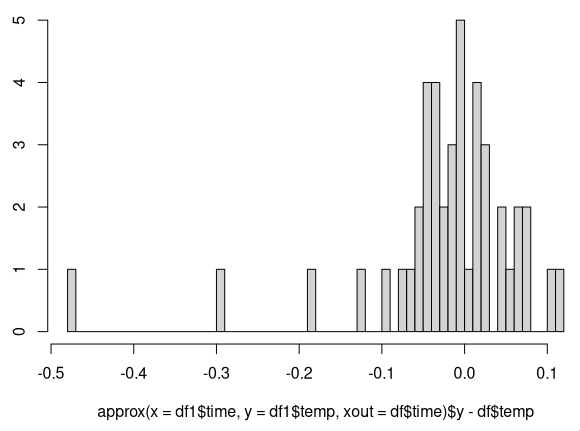
It is really no bother when [1] exists. It took a couple of minutes at most. These are the differences between the transcribed data and the CSV values: https://i.xkqr.org/transcracc.png


My reasoning is: If LLMs get better at writing—which I think is extremely likely—will you switch positions and say that now using LLMs without disclosure is A-OK?
Surely some people are willing to bite that bullet and say yes. But for most people, my guess is that the answer will remain no. Thus, I tend to think that the "real" reason most of us don't like it when people use LLMs to write without disclosure is that it's misleading: It's a sort of a claim that certain thoughts can be attributed to a human being when in fact they can't.
(The em dashes in this message were rendered using keyboard shortcuts.)
reply