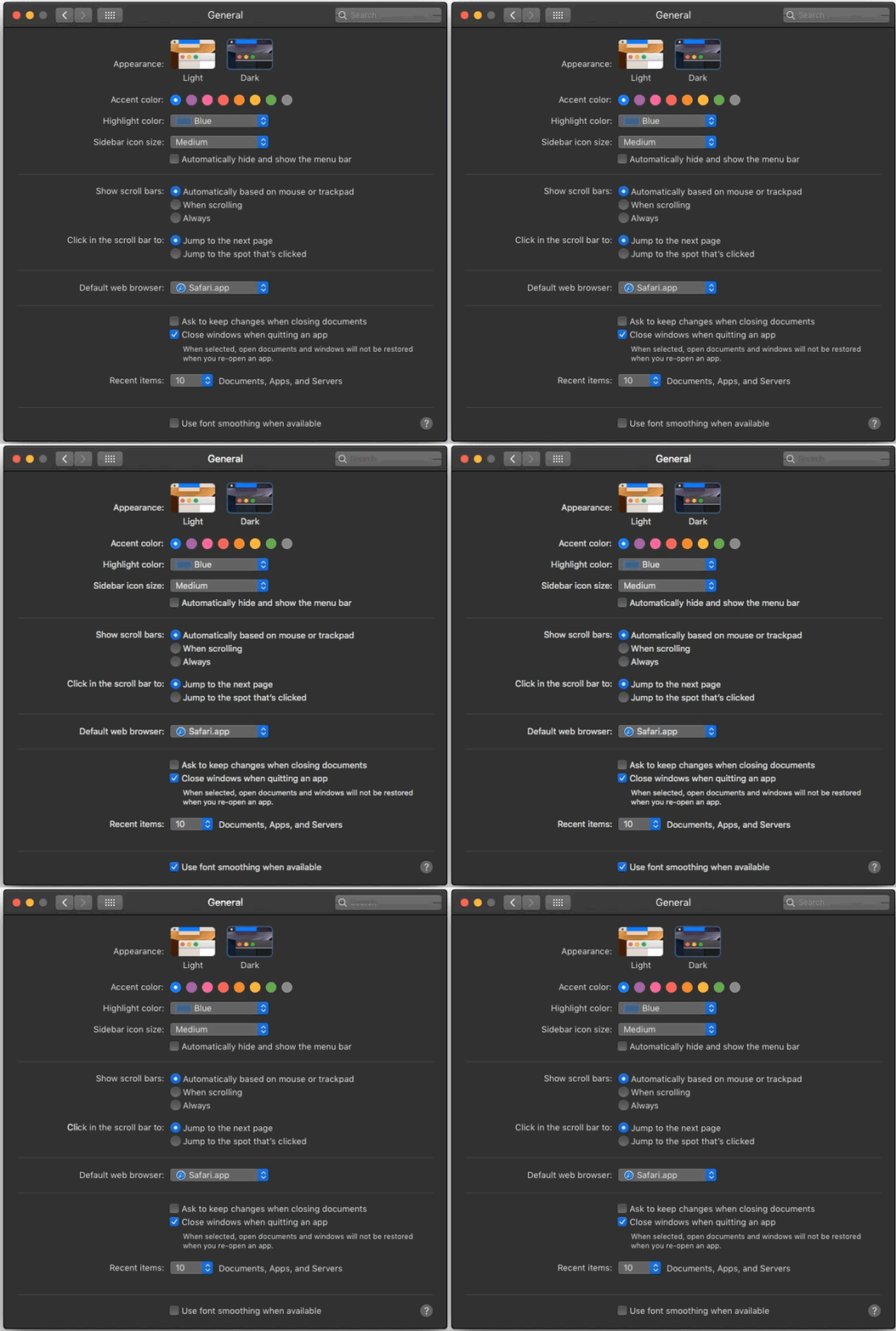
I feel like youre arguing a different point here. I agree with the other person that hooking a macOS machine to a non-HiDPI monitor makes for an awkward (Id call downright bad) font experience, due to them having removed subpixel anti aliasing a few versions ago. It was so jarring to me that I took closeup pictures of the pixels, and they were all rendered really badly on a 1440p screen, to a degree that you can't claim that typographers would disagree.
https://news.ycombinator.com/item?id=17476873
I agree that there's substantial qualitative difference between sub-pixel antialiased text and the plain render. The former takes advantage of greater lateral resolution and perceptual differences between the primary colors. That said, I wouldn't consider the absence of that technique jarring. I intentionally change bright-on-dark text to greyscale antialiasing[1], to counter the halation[2]. All the links to images in the thread and the Reddit post you linked are dead, so I can't see how the text rendered for you. Did you by any chance experience this on a MacBook connected to an external monitor, where you had the system set up to render type better on the built in screen[3]? Your point holds though, they don't optimize for 3rd party hardware. I was a bit quick to jump in, thinking you were referring to the difference between their flavour of sub-pixel antialiasing and Microsoft's ClearType[4].
I personally prefer https://explain.dalibo.com over depesz's version, both from a visualization standpoint (I can more clearly see the hierarchy of operations) but also because I've had some not great experiences with depesz the individual. Great blog, but a really soured opinion of him.
Yeah, I think it's strange that no one wants to improve on something like this.
I can see a lot of use cases where you would want to just use one kubernetes cluster but have support for multi-tenancy with pods being isolated.
Nix and Docker share the same purpose in this context: declaring the dependencies needed for this environment. This can include shell scripts, system-level dependencies etc. If anything I would say Nix would be better here (logical middleground in filesystem separation between having access only to whats in the container vs having to juggle system-level dependency versions for the entire system), while also having better version pinning.
Note that if you delete entries in non sequential order (aka not at the start-only or the end-only) and continue inserting, BRIN index becomes much less effective. Its very much predicated upon the concept of append-only, as postgres filling deleted rows with new rows throws off the physical layout part of how BRIN works
You can check if your data remain correlated after your updates. It's possible they do: SELECT correlation FROM pg_stats WHERE tablename = 'mytable' AND attname = 'mytimestamp';
You lost me at saying Go let's you forget to handle errors, when its pretty objectively more vocal at having you not handle them than Kotlin with its lack of checked exceptions, having just said Kotlin (and C#) are better than Go in its class. And I say this as a big fan of both Go, Kotlin and Rust.